Robert Wood
-

The Wolf-Rayet Star WR7: Heart of Thor’s Helmet Nebula
This week’s capture is that of NGC 2359, Thor’s Helmet. This is a beautiful nebula in Canis Major. It comprises a central illuminated bubble-like structure attached to two prominent “wings” giving rise to its name. There is however much more to this superhero’s headgear when we start to peel back its layers. At the heart…
-

M81: Capturing the Grand Design Spiral Galaxy
This week we bring you the companion galaxy to last week’s target, Messier 81, commonly called “Bode’s Galaxy.” M81 was discovered in 1774 by Johannes Bode and then cataloged by Charles Messier again in 1779. It sits in the Northern area of Ursa Major, or more commonly known as the Big Dipper. It is a…
-
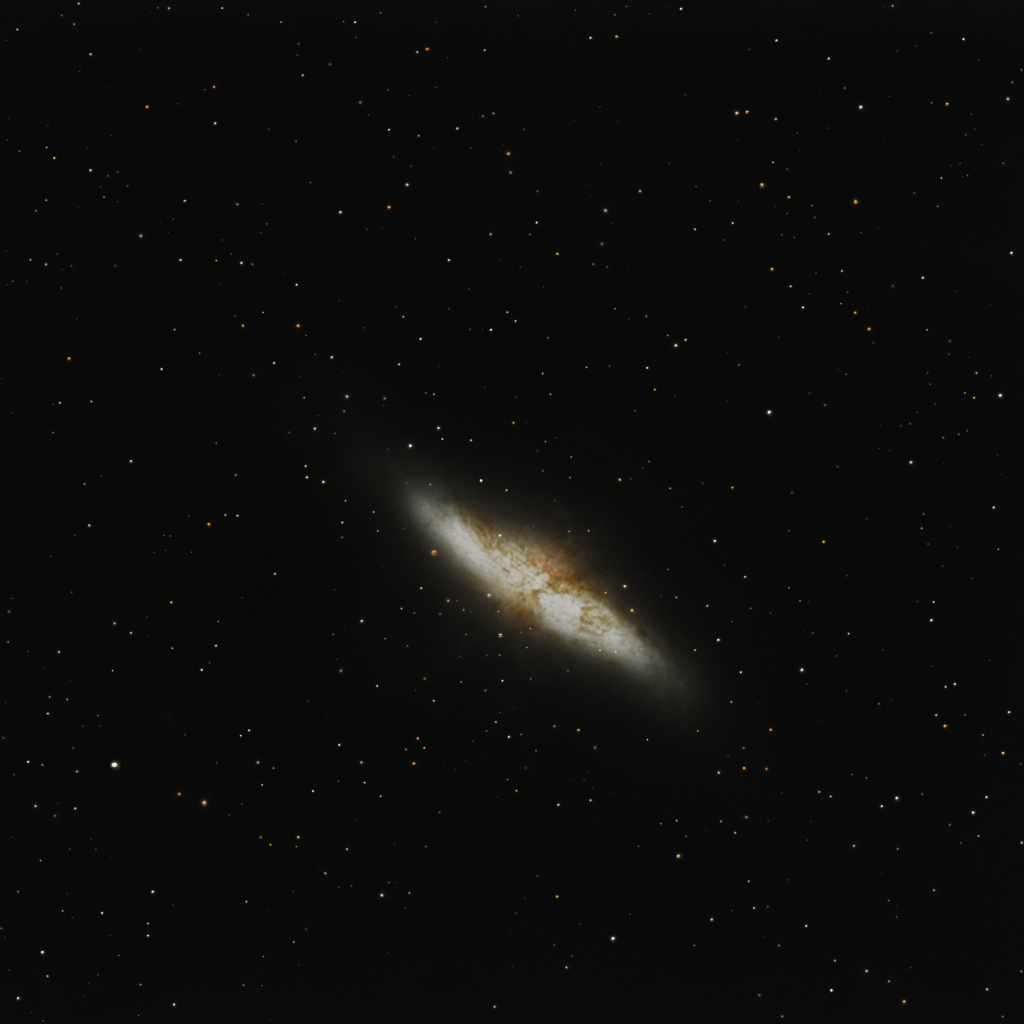
Spring Skies: Discover the Starburst Galaxy M82
With the coming of spring, we start to see a parade of galaxies come across our skies which gives us an opportunity to look further back in time and explore the origins and evolution of our own galaxy by observing other galaxies around us. Today’s capture is Messier 82, a unique galaxy in our neighborhood.…
-
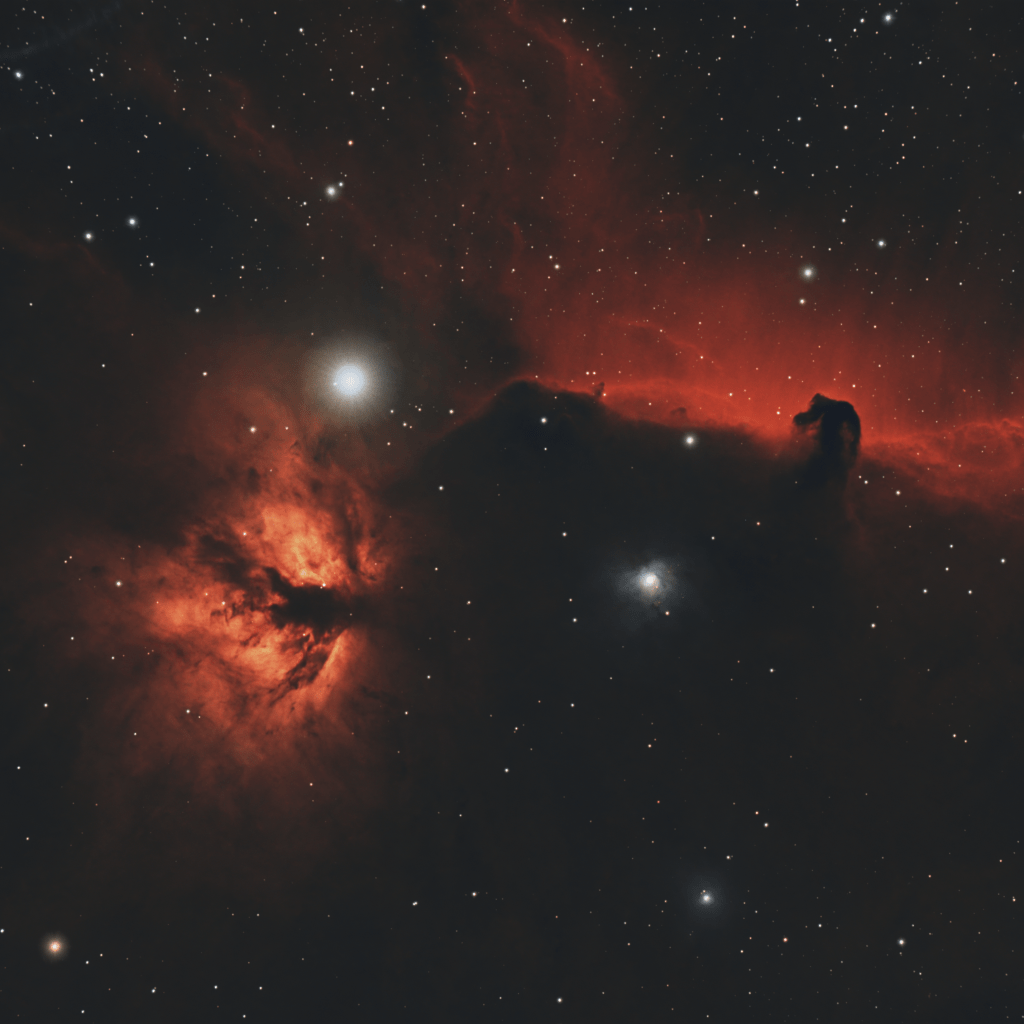
The Flame and Horsehead Nebulae: A Cosmic Duo
Today’s image is an iconic image captured in December of ’24 featuring the Flame and Horsehead Nebulae. While these two nebulae in themselves are absolutely beautiful, there is a lot more in this image to be explored, so let’s get into it. NGC 2024, commonly called “The Flame Nebula,” is an emission nebula. A dark…
-
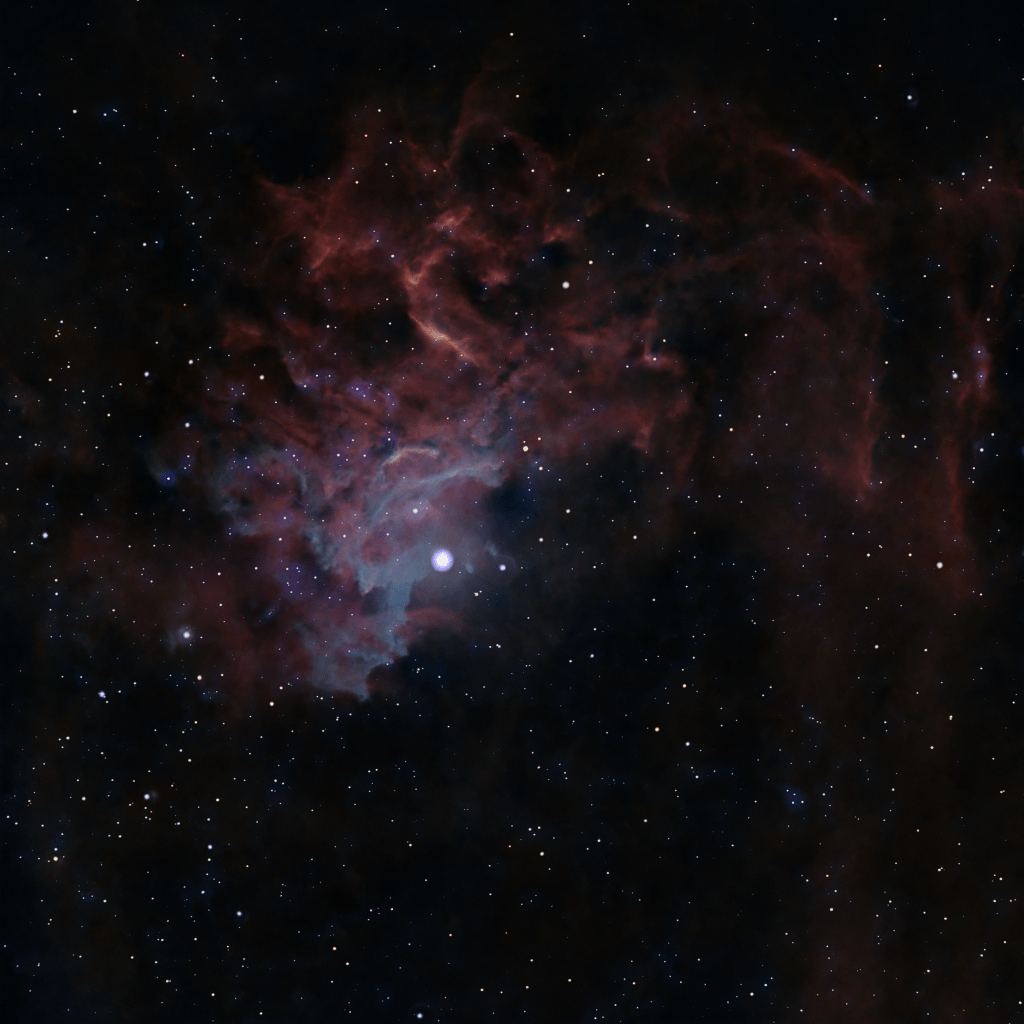
Understanding IC 405: Emission and Reflection Nebula Insights
This week’s image is that of IC 405, otherwise known as the Flaming Star Nebula. It resides approximately 1,500 light years away in the constellation of Auriga. The nebula consists of both an emission and reflection nebula. The bright star in the center is AE Auriga and is a hot blue star. The energy from…
-

Understanding Reflection Nebulae: Messier 78 Explained
Messier 78 is a reflection nebula in the Orion constellation discovered by Pierre Mechain in 1780. It is about 1350 light years distant and approximately 5 light years in diameter. Unlike emission nebula which shine by the ionization from nearby hot highly energetic stars, reflection nebulae shine by reflecting or scattering light from cooler stars.…
-
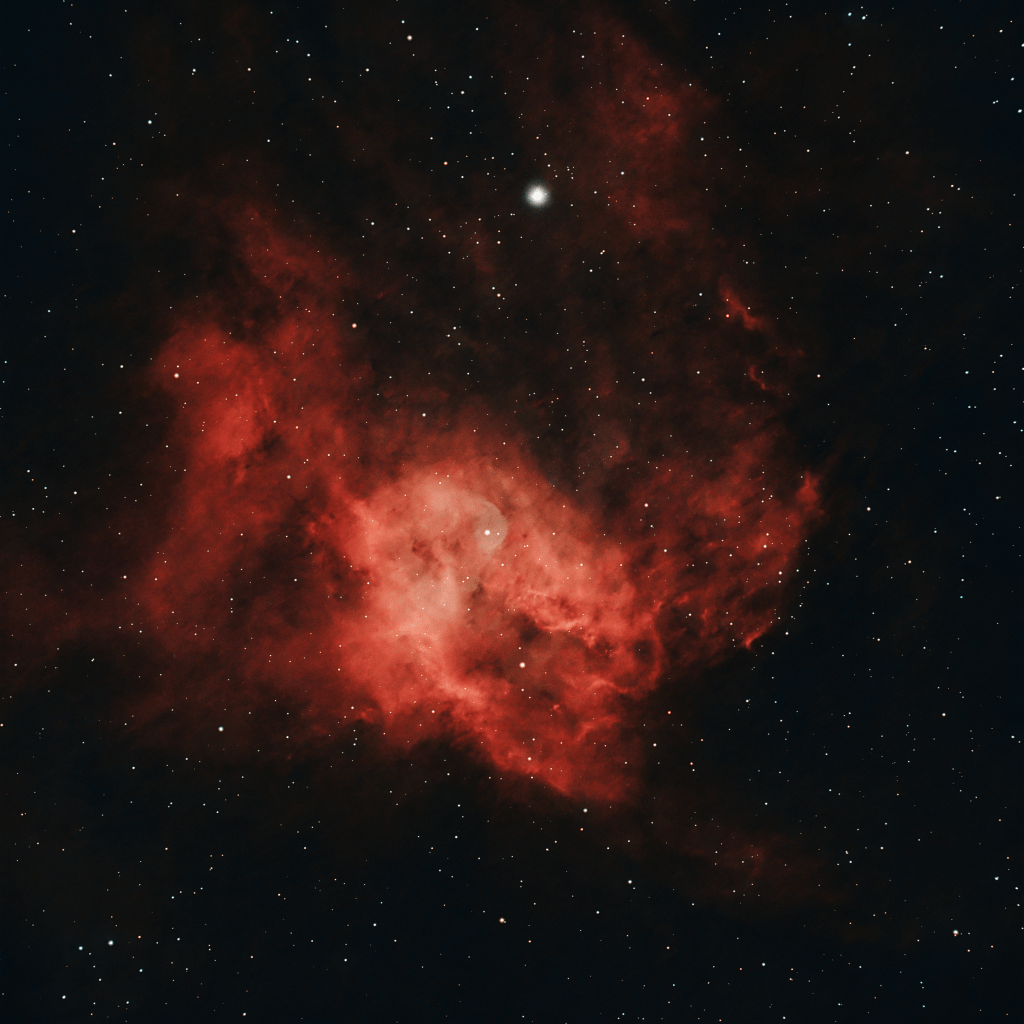
Exploring Sharpless 2-280: The Hidden Nebula of Monoceros
Sharpless 2-280 is a faint emission nebula in the constellation Monoceros. It is located approximately 2 degrees away from the more famous Rosette Nebula, which was the subject of my previous post. Being much fainter, this intriguing nebula, along with its proximity to its larger and brighter counterpart, is often overlooked by many astrophotographers who…
-
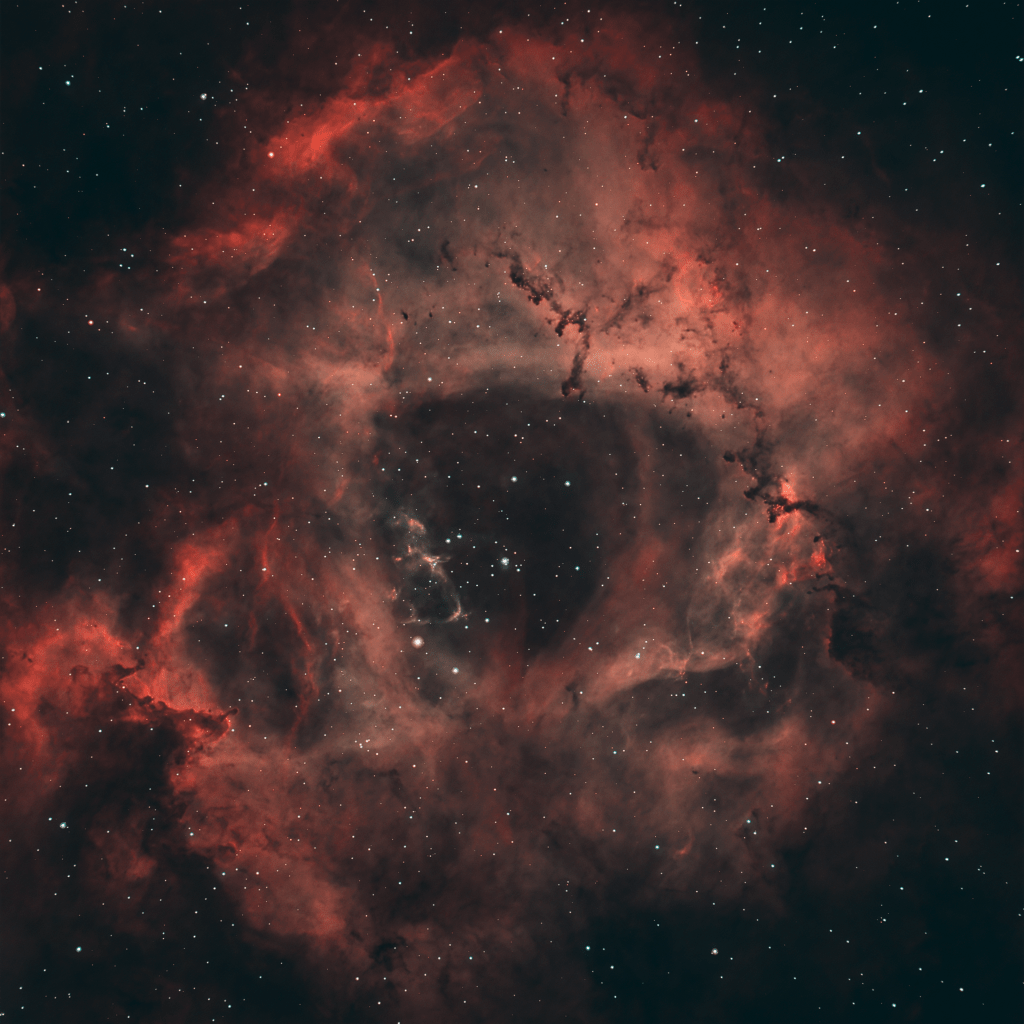
Exploring the Visual Beauty and Science of the Rosette Nebula
The Rosette Nebula is a very interesting area and one that shows off a lot of the processes involved in stellar evolution, particularly in how new stars are formed from the surrounding gas and dust. This magnificent region, located in the constellation Monoceros, not only captivates astronomers with its stunning visual beauty, but it also…
-
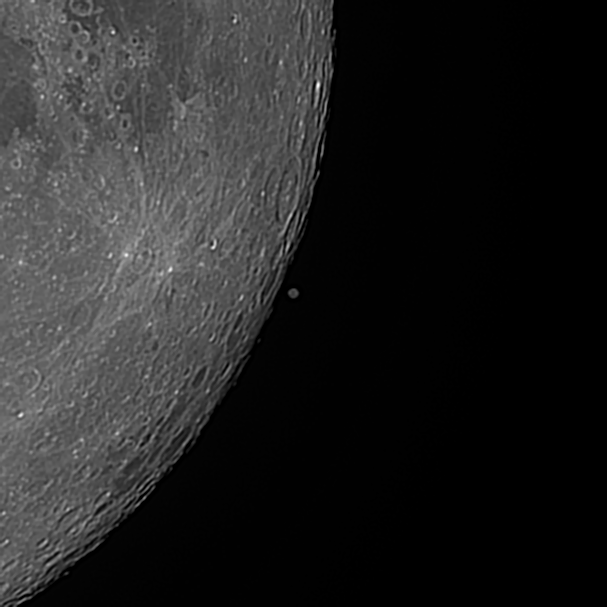
Jan’25 Occultation of Mars
In the astronomy and astrophotography hobby we are mostly observing or imaging very static objects. In a lot of ways this is beneficial as if the weather gods or our busy schedules do not allow you to observe/image one night, well there is always the next night and the night after that or even next…
-
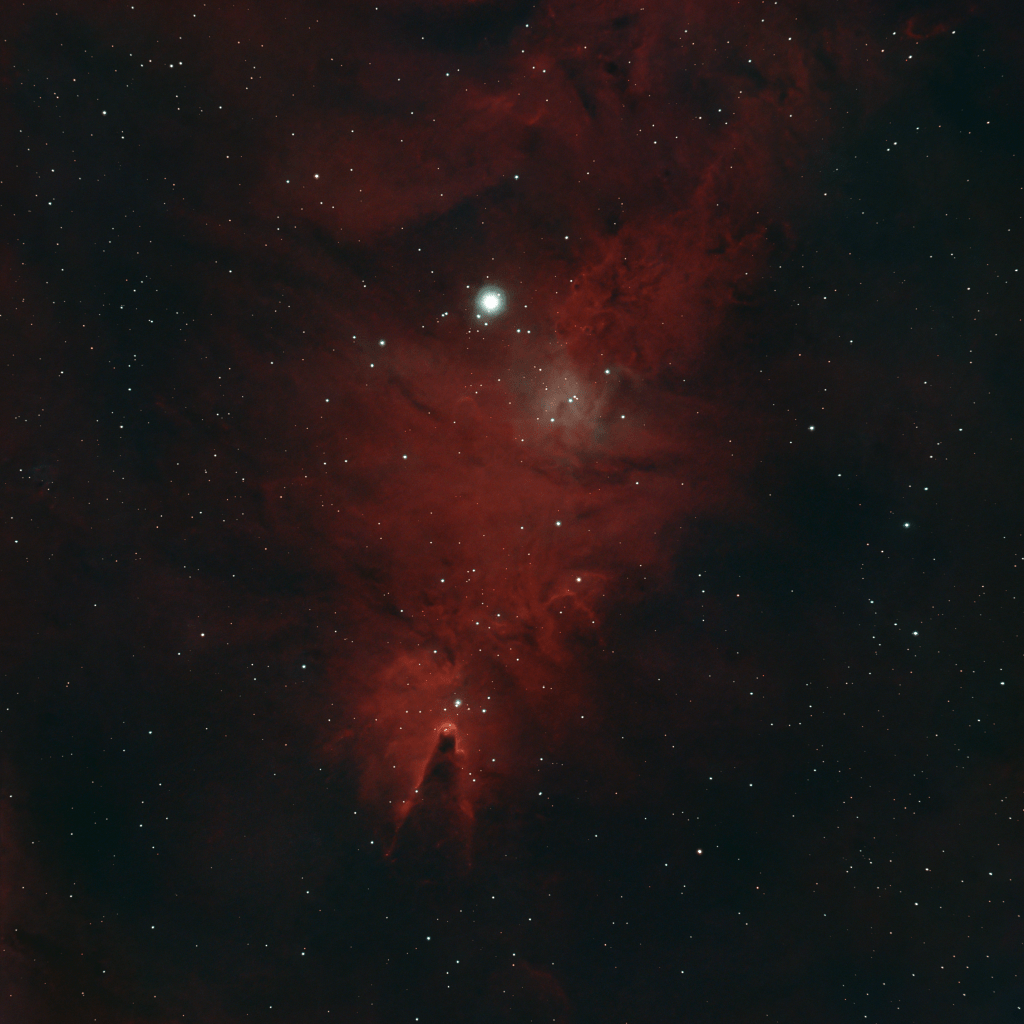
The Cone and the Christmas Tree
Nights with a bright moon can be a challenge for imaging. You either need to choose a bright object that is located away from the moon, or image in narrow band which typically means imaging an emission nebula like the example above. This is the Cone Nebula and Christmas Tree Star Cluster, NGC 2264. The…

