Galaxies
-
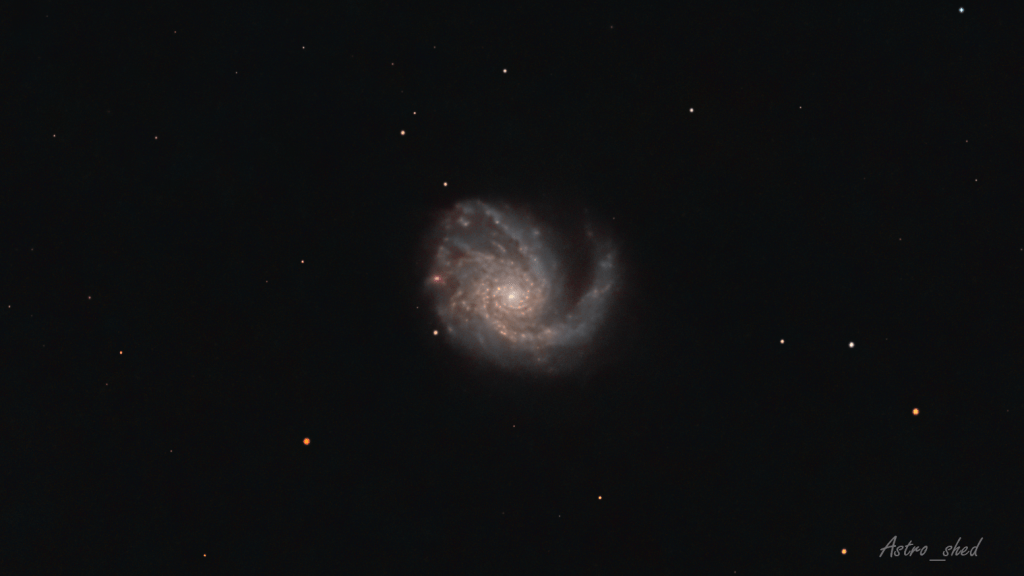
Discover the Wonders of Spiral Galaxies
With Spring comes the opportunity to observe and image galaxies. Galaxies are one of my favorite objects of the night sky due to their diversity and details. This week we’re going to look at spiral galaxies and in particular some unique features of spiral galaxies. I’ve provided examples of Spirals, Barred Spirals and Intermediate Spirals…
-
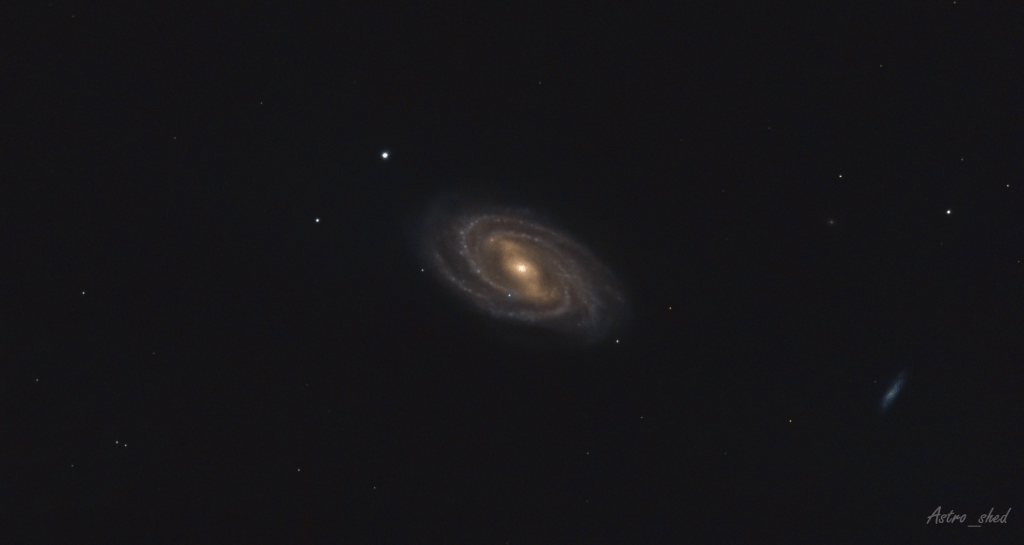
Messier 109 – Galaxy Season Starts Here….
With every spring comes what Astro imagers call “Galaxy Season.” This is the one time when our little planet’s orbit around its sun allows us to look perpendicular to our home galaxy’s disc during the night-time hours. Looking perpendicular to the Milky Way’s disc reveals an area of space where galactic dust and stars no…
-
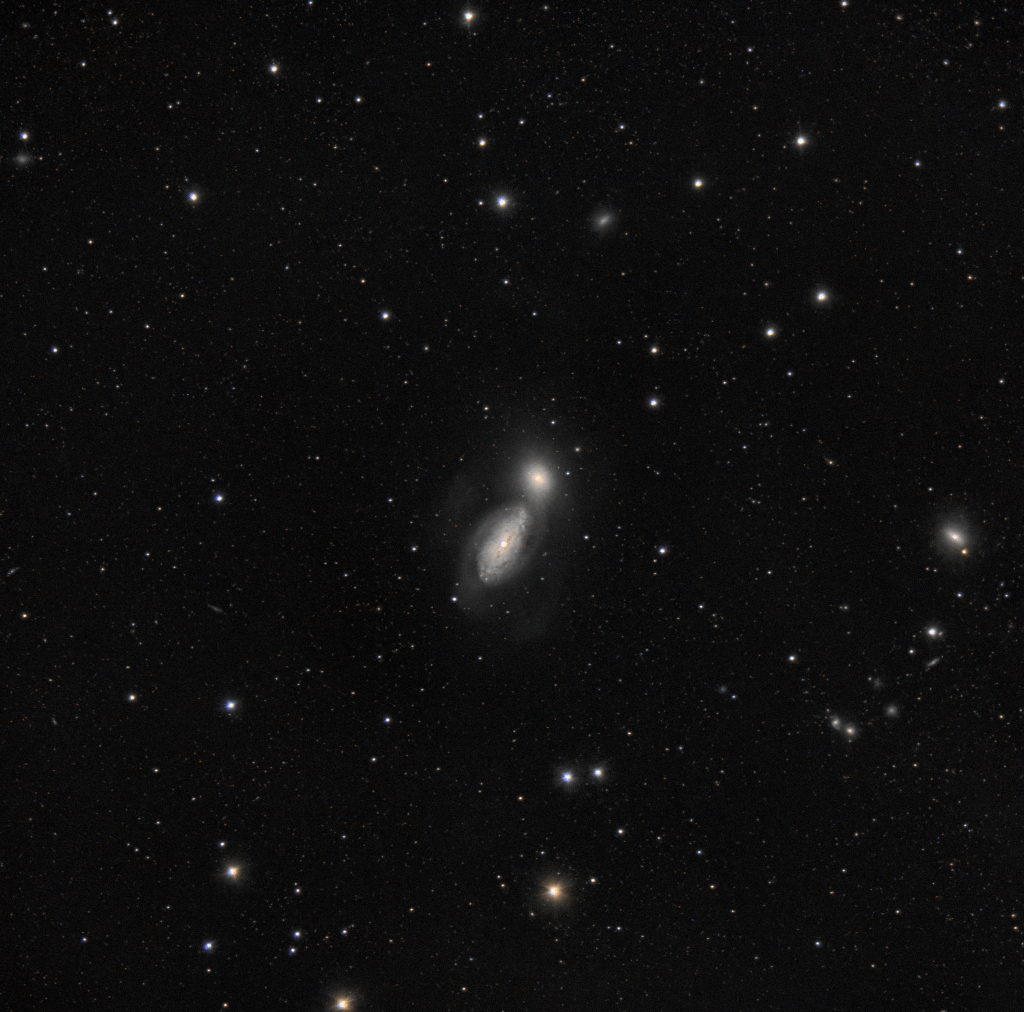
Understanding NGC 3226/3227: A Stellar Dance of Galaxies
Today’s image is a pair of interacting galaxies, NGC 3226 and NGC 3227, also known as APR 94. NGC 3227, the large central spiral is an SAB(s)a, while its companion, NGC 3226 is an E2 elliptical. There is also a string of galaxies to the right of the frame. The brightest one is NGC 3222. …
-
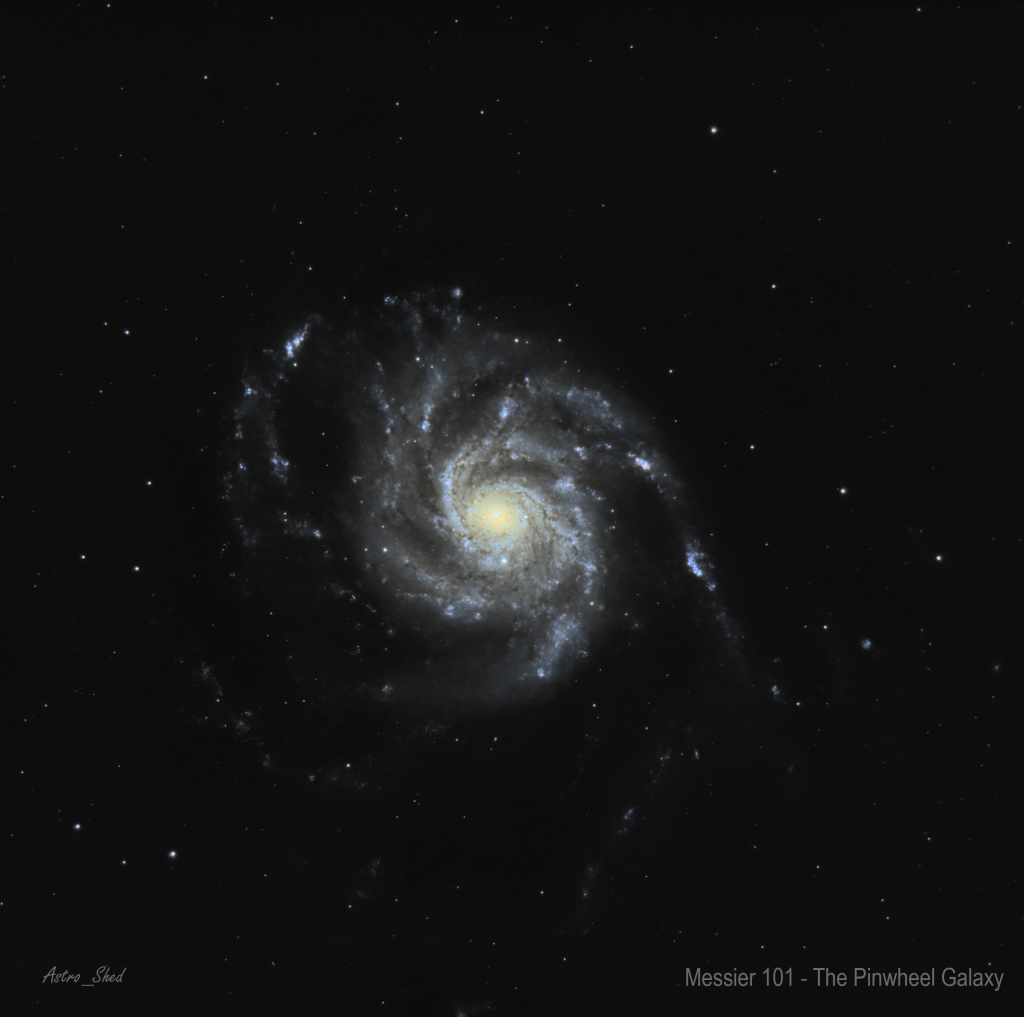
Improving Image Sharpness in Astrophotography
Celestron SCT 8″ with 0.63x reducer Celestron AVX Mount Svboney 50mm guide-scope ZWO ASI 533 MC Pro Camera 240×30 sec subs, 2 hour integration Celestron SCT 8″ with 0.63x reducer ZWO AM5n Mount ZWO Off-axis guider ZWO ASI 533 MC Pro Camera 40×180 sec subs, 2 hour integration I started my serious efforts in photographing…
-
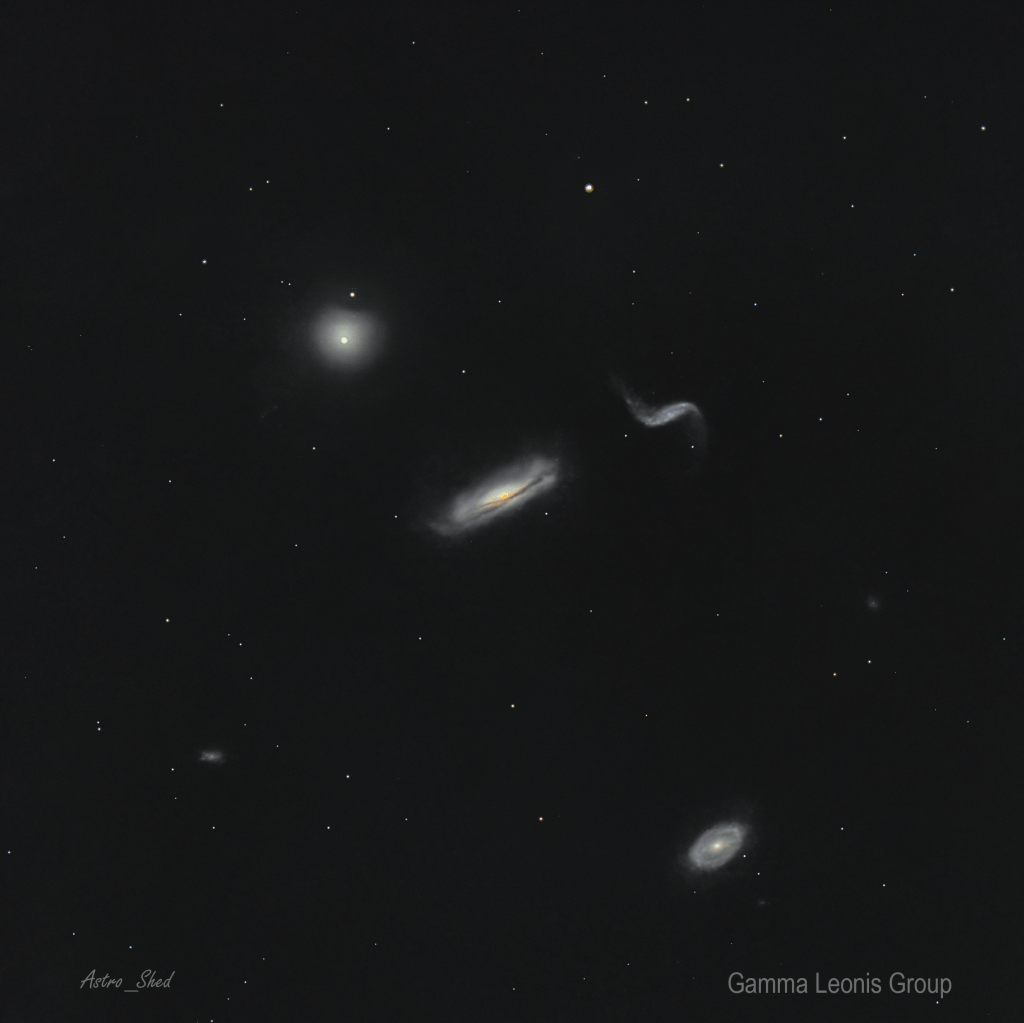
Exploring the Gamma Leonis Group: A Galaxy’s Showcase
This week’s capture centers on a group of galaxies in Leo. It is called the Gamma Leonis Group. This collection is also known as Hickson 44. It lays a little more than 2 degrees away from Gamma Leo, Algieba. The group consist of 4 prominent galaxies, all centered on NGC 3190, an edge-on spiral. Halton…
-
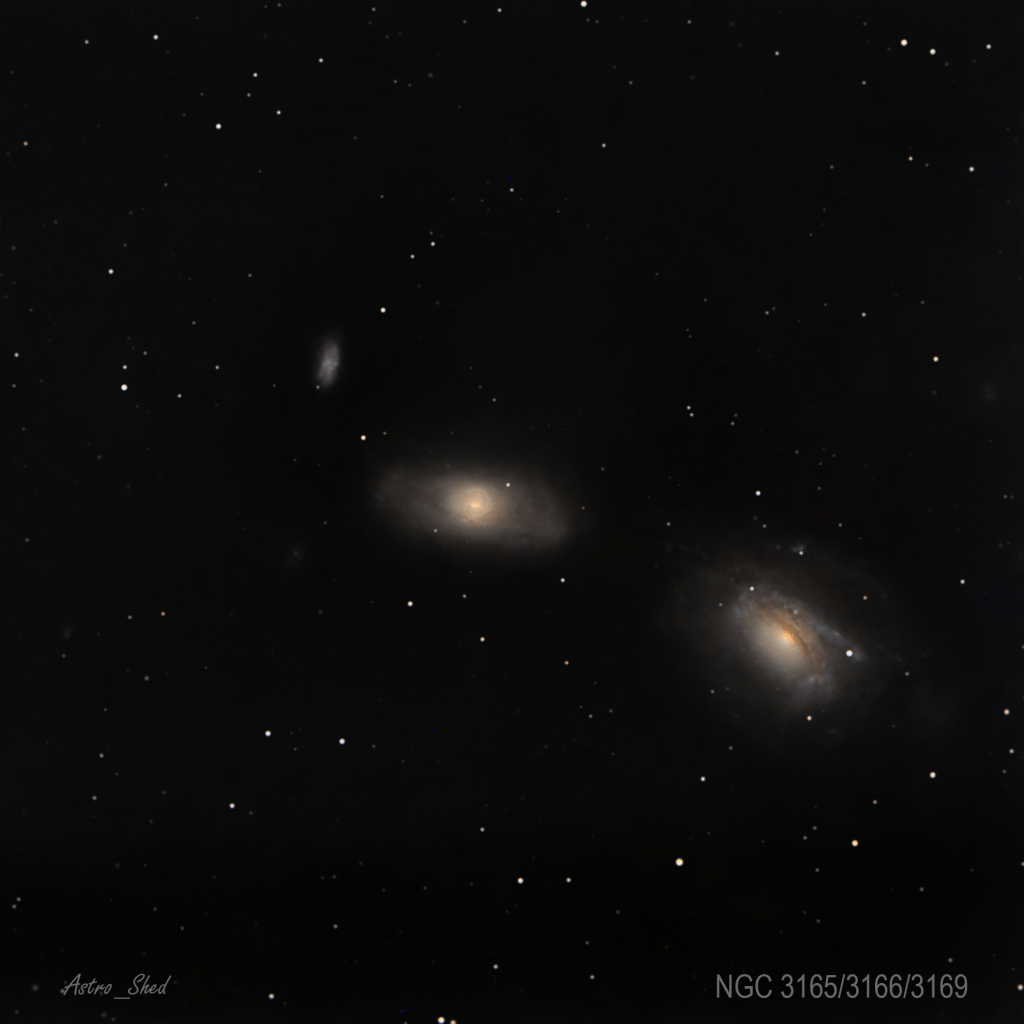
Capturing A Trio of Galaxies: NGC 3165, 3166, 3169
I recently completed the Astronomical League’s Local and Neighboring Galaxies Imaging list. That completed project log can be found here. It was now time to take on a new project. I wanted an observing list that I could work on across multiple seasons and with multiple scope setups. An added bonus would be some variety…
-
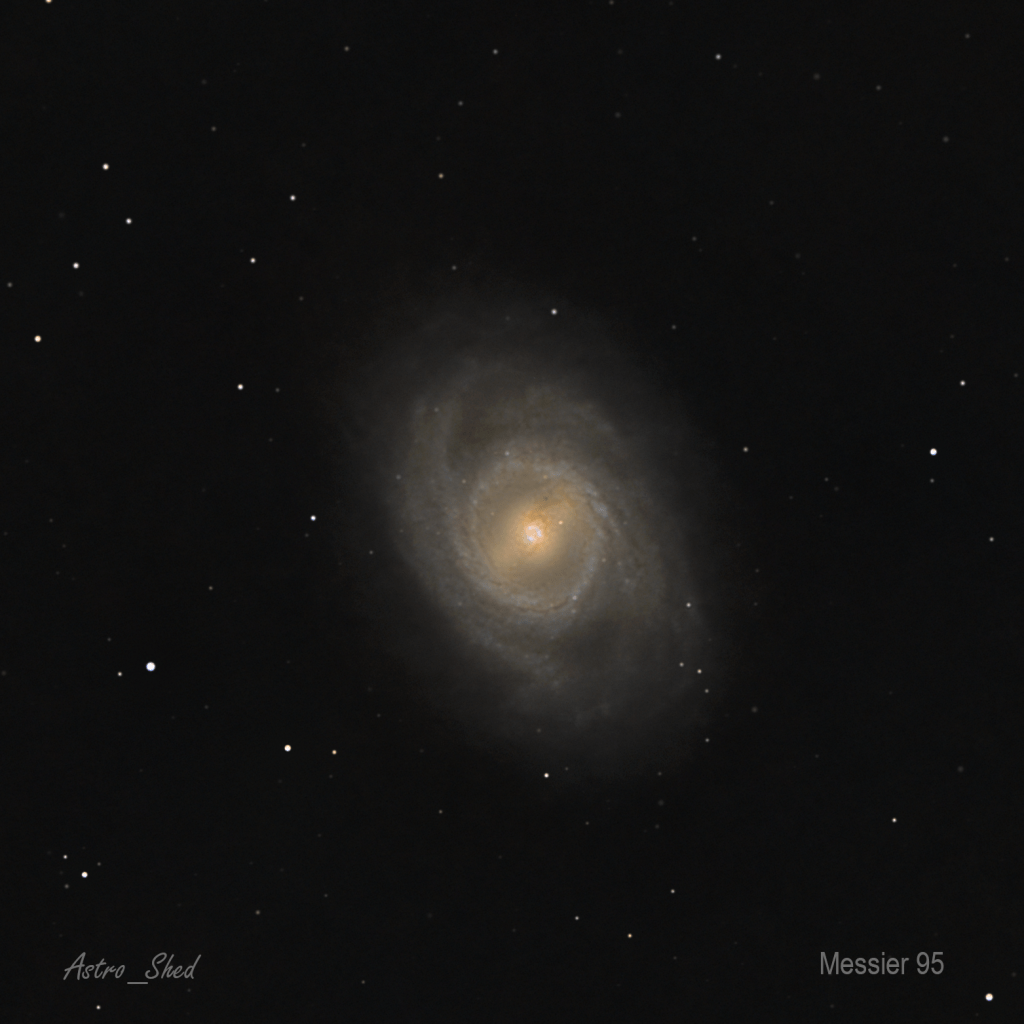
Exploring the Structure of Messier 95 Galaxy
Messier 95 was discovered by Pierre Mechain in 1781, marking it as one of the noteworthy entries in the Messier catalog. It is a 9.7 magnitude galaxy located in the constellation Leo, a region of the sky known for its rich collection of astronomical objects. This stunning spiral galaxy lays about 33 million light-years from…
-
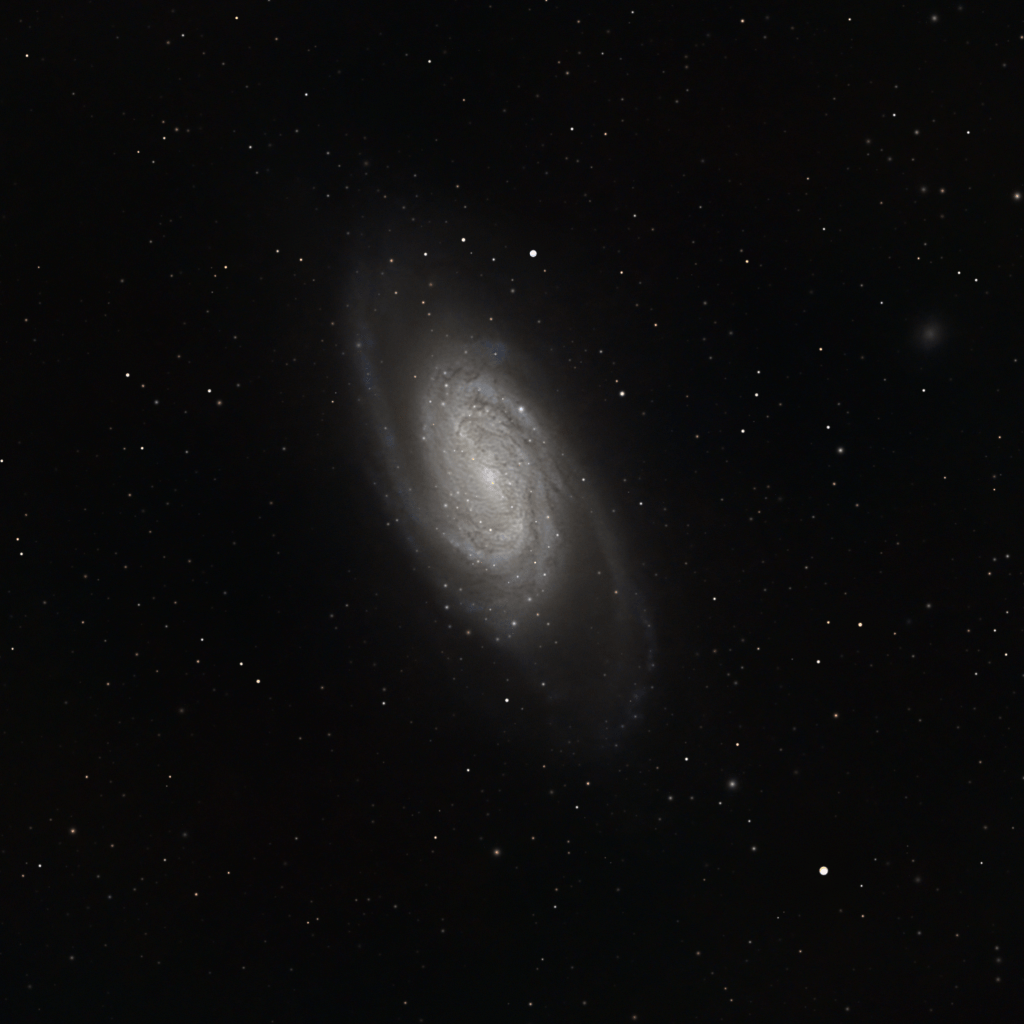
Photographing NGC 2903: A Springtime Astronomical Gem
Today’s capture is that of NGC 2903. It was somehow missed by Charles Messier when he was compiling his catalog of large bright objects. It was eventually discovered by the astronomer William Herschel in 1784. He originally cataloged it as two separate “nebulae”, NGC 2903 and NGC 2905. A century passed before the 3rd Earl…
-

M65, M66, and NGC 3628: Discovering the Leo Triplet
The Leo Triplet, as the name implies, is a magnificent group of three galaxies. They are located in the Leo constellation, which lies in the northern celestial hemisphere. The trio consists of the galaxies NGC 3628, M65, and the well-known M66. Each of these galaxies exhibits unique characteristics and intriguing features. This group belongs to…
-

M81: Capturing the Grand Design Spiral Galaxy
This week we bring you the companion galaxy to last week’s target, Messier 81, commonly called “Bode’s Galaxy.” M81 was discovered in 1774 by Johannes Bode and then cataloged by Charles Messier again in 1779. It sits in the Northern area of Ursa Major, or more commonly known as the Big Dipper. It is a…
 Astro-Shed