Nebulae
-
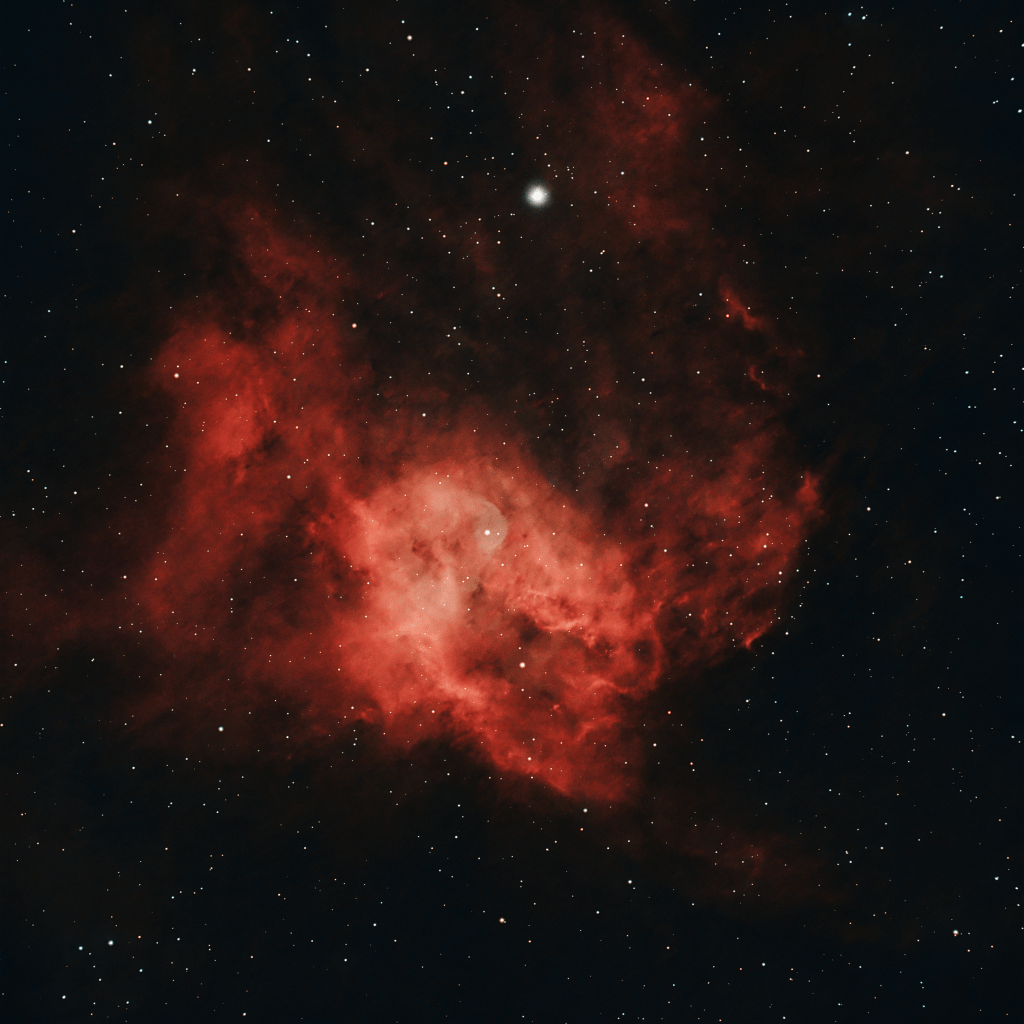
Exploring Sharpless 2-280: The Hidden Nebula of Monoceros
Sharpless 2-280 is a faint emission nebula in the constellation Monoceros. It is located approximately 2 degrees away from the more famous Rosette Nebula, which was the subject of my previous post. Being much fainter, this intriguing nebula, along with its proximity to its larger and brighter counterpart, is often overlooked by many astrophotographers who…
-
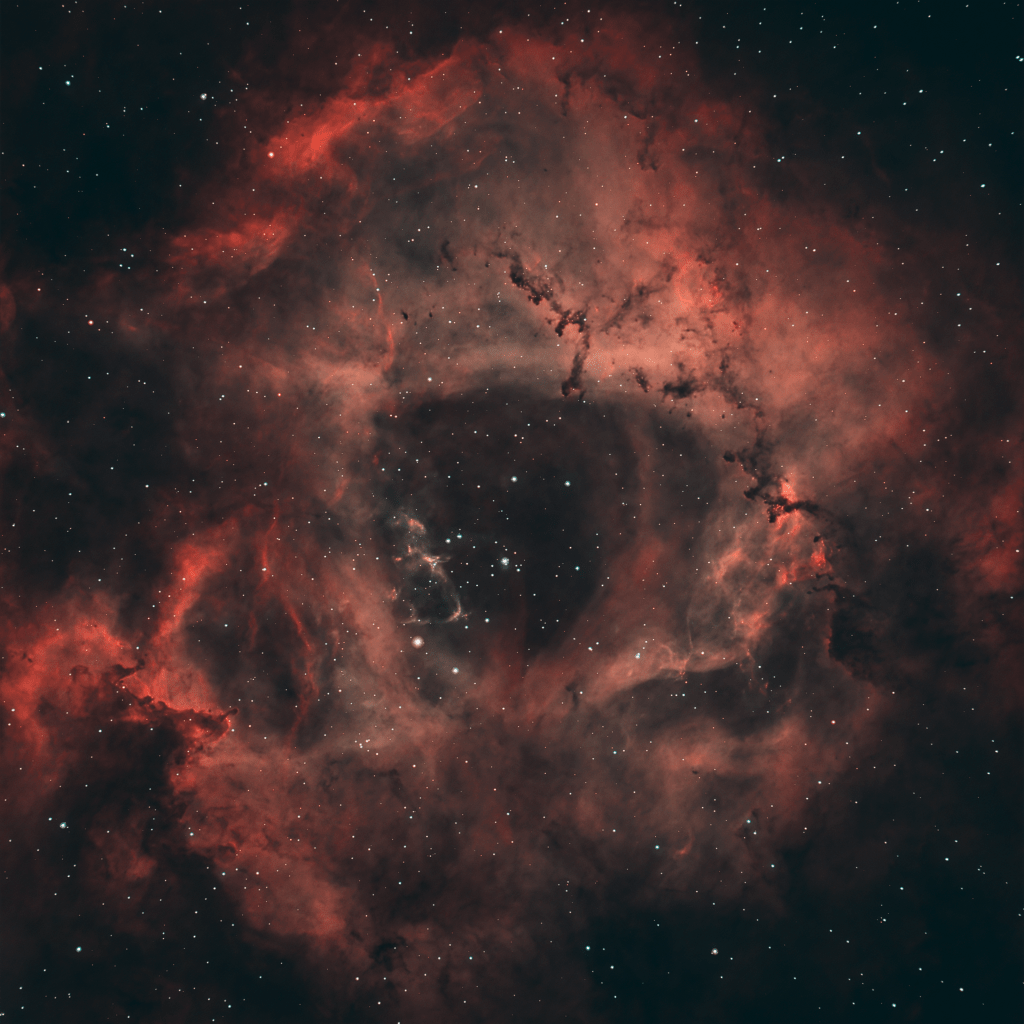
Exploring the Visual Beauty and Science of the Rosette Nebula
The Rosette Nebula is a very interesting area and one that shows off a lot of the processes involved in stellar evolution, particularly in how new stars are formed from the surrounding gas and dust. This magnificent region, located in the constellation Monoceros, not only captivates astronomers with its stunning visual beauty, but it also…
-
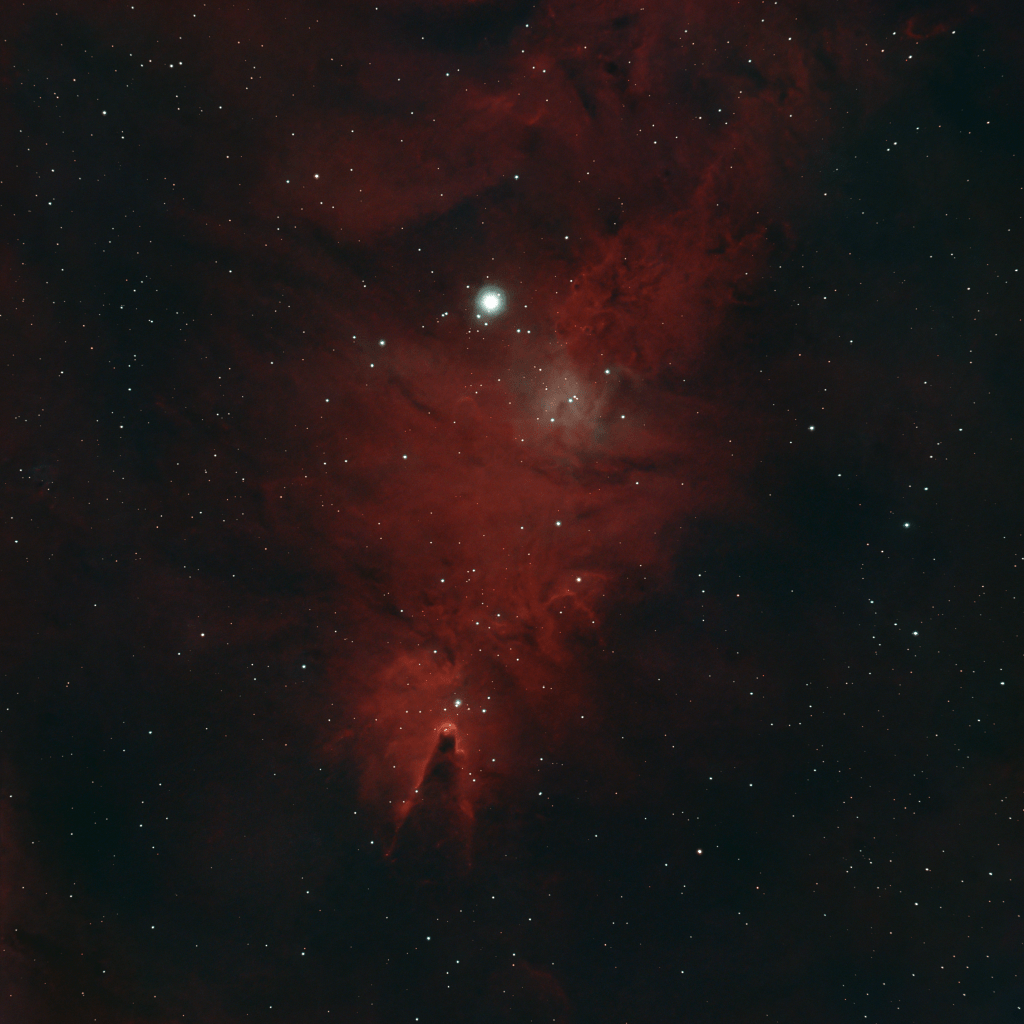
The Cone and the Christmas Tree
Nights with a bright moon can be a challenge for imaging. You either need to choose a bright object that is located away from the moon, or image in narrow band which typically means imaging an emission nebula like the example above. This is the Cone Nebula and Christmas Tree Star Cluster, NGC 2264. The…
-

M1 – The Crab Nebula
Messier 1, also known as the Crab Nebula, was discovered by Charles Messier in 1758 during his extensive search for comets, which he meticulously cataloged to differentiate between these transient celestial objects and permanent ones. This remarkable nebula is the remnant of a supernova explosion that was observed in 1054 AD, and it has since…
-
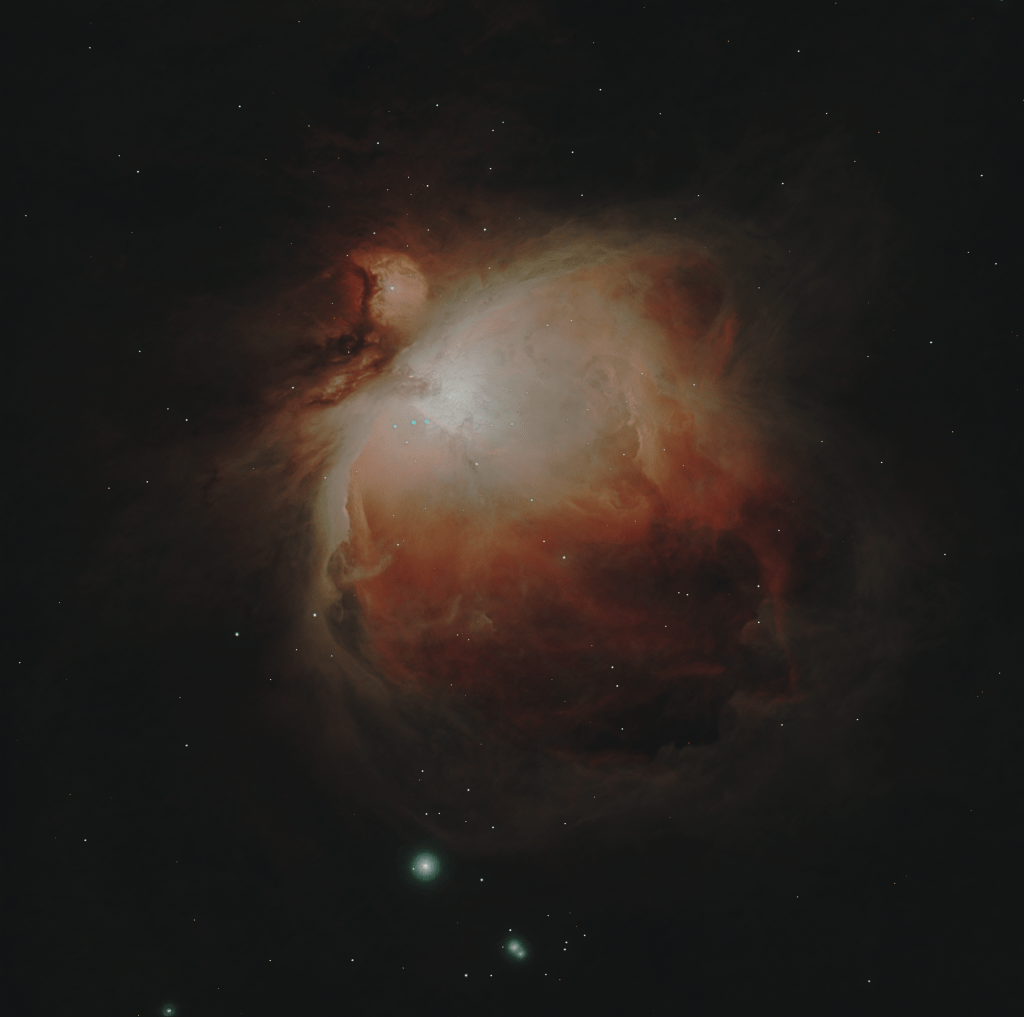
Messier 42 – The Orion Nebula
The Orion Nebula is one of the nearest, and therefor brightest, stellar nurseries in the Milkyway. At the heart of the nebula is a cluster of young, hot stars referred to as the Trapezium. They are just barely visible in the whitish area of this image. The energy from these stars is exciting the interstellar…
-

Sh2-232
Sh2-232 captured on 1-6-25. This is a faint HII region in the constellation of Auriga, which lies prominently in the northern sky. The brighter nebula in the vicinity offers a stunning contrast against the dark background of space, showcasing vivid colors produced by the ionization of hydrogen gas. As an area of star formation, Sh2-232…
 Astro-Shed