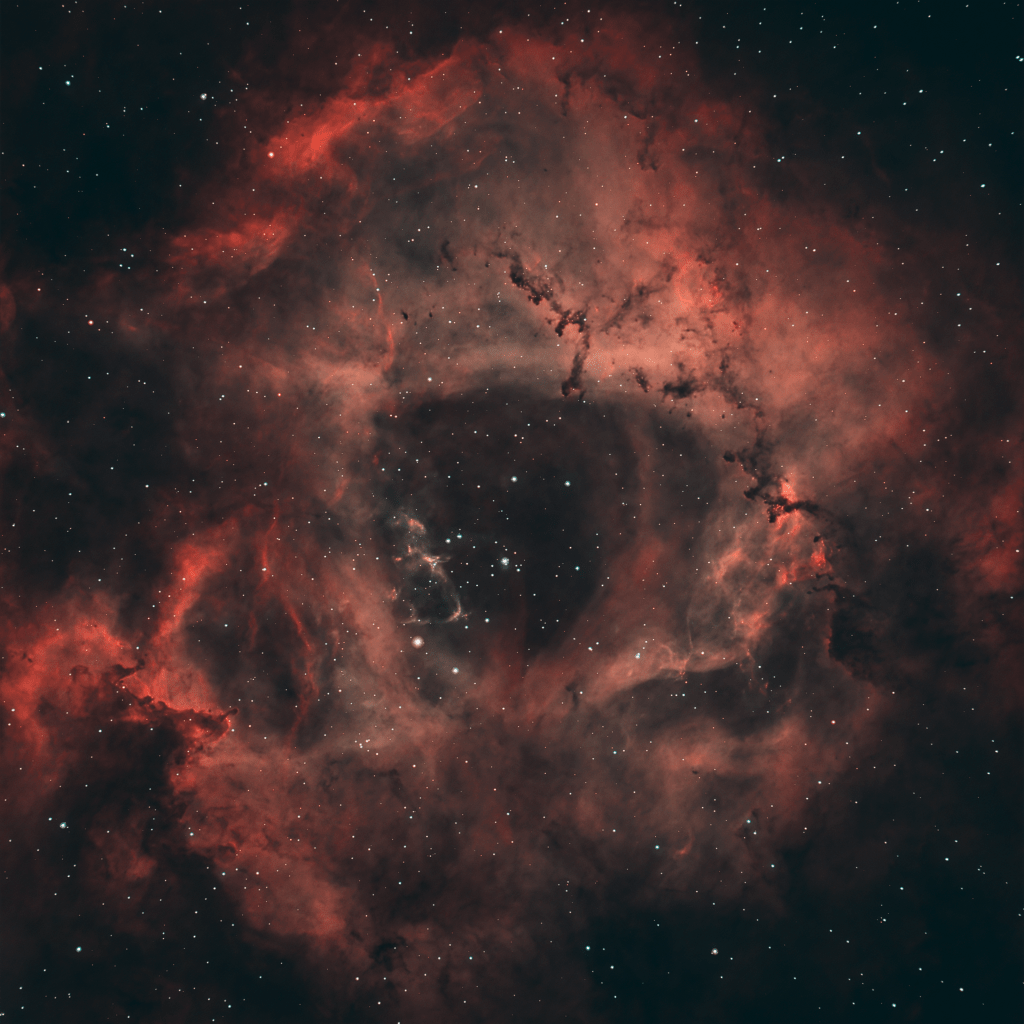
The Rosette Nebula is a very interesting area and one that shows off a lot of the processes involved in stellar evolution, particularly in how new stars are formed from the surrounding gas and dust. This magnificent region, located in the constellation Monoceros, not only captivates astronomers with its stunning visual beauty, but it also serves as a crucial laboratory for understanding the lifecycle of stars. As massive clouds of hydrogens and other elements collapse under their own gravity, they ignite nuclear fusion, resulting in the birth of new stars. Furthermore, the brilliant, glowing gases revealing vibrant colors are indicative of the intense radiation emitted by these young stellar formations, thus creating an intricate dance of light and shadow that fascinates both scientists and enthusiasts alike.
This image is comprised of an open cluster of stars surrounded by a beautiful emission nebula. The star cluster was originally discovered by John Flamsteed in 1690. The nebula, being much fainter, was discovered a century later by John Herschel. The distance to the cluster and associated nebula is about 5,000 light years with an approximate diameter of 65 light years.
The star cluster contains approximately 2500 stars and is a mere 5 million years old. There are two brighter stars dominating the cluster, 12 Monoceros, a type K0 red giant and HD 46223 which is a type O4 blue giant. The energy from these stars is the source for the ionization of the hydrogen gas in the nebula.
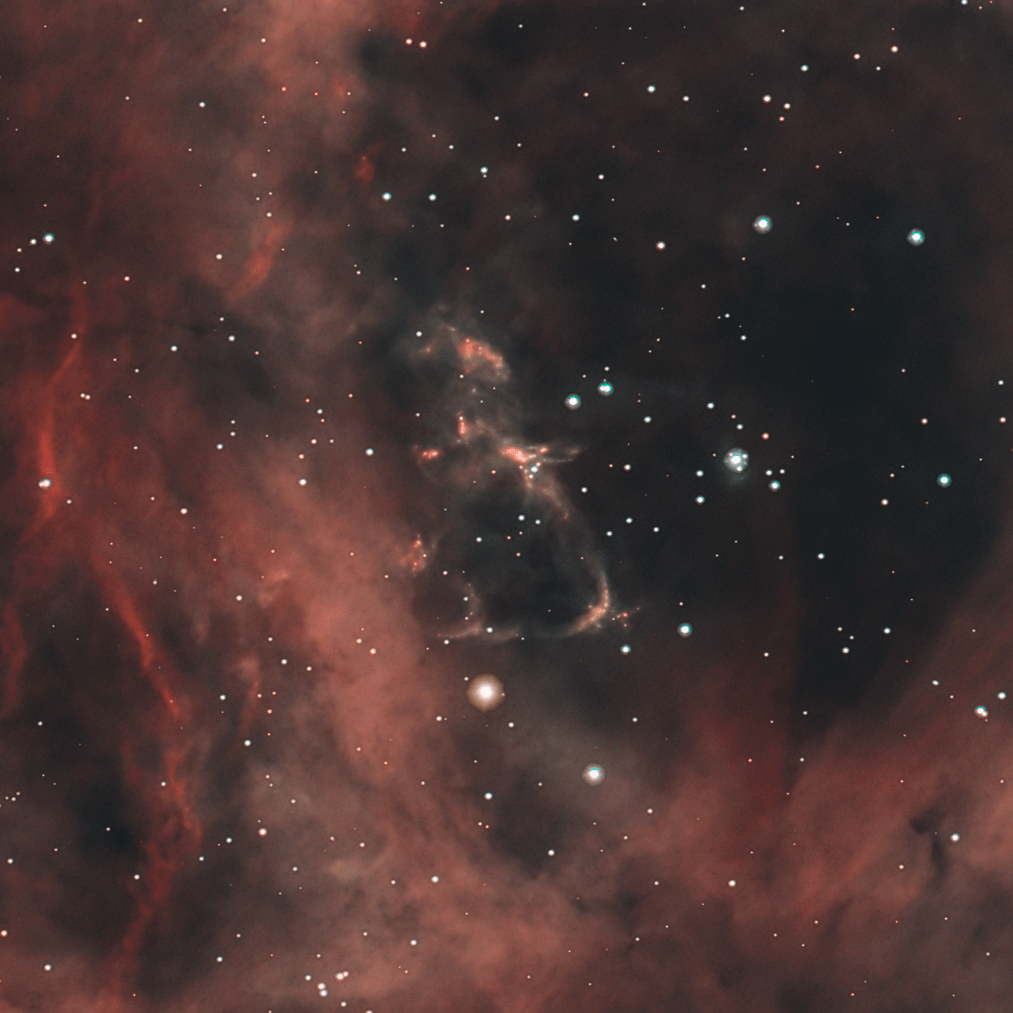
One noticeable feature are the delicate arcs of glowing gases in the central region of the nebula. Looking closely, you can see these are part of “bubbles,” which typically form around young stellar objects or older stars as they shed material prior to becoming white dwarfs.
Another interesting feature of the nebula are the lace-like ribbons of dark gas which hide the glowing gas behind them. These ribbons of cold dense gas appear to have fingers pointing towards the central regions of the nebula. These are referred to as BOK globules and are thought to be a precursor to stellar formation. New stars, in time, may appear at the end of these dark fingers.
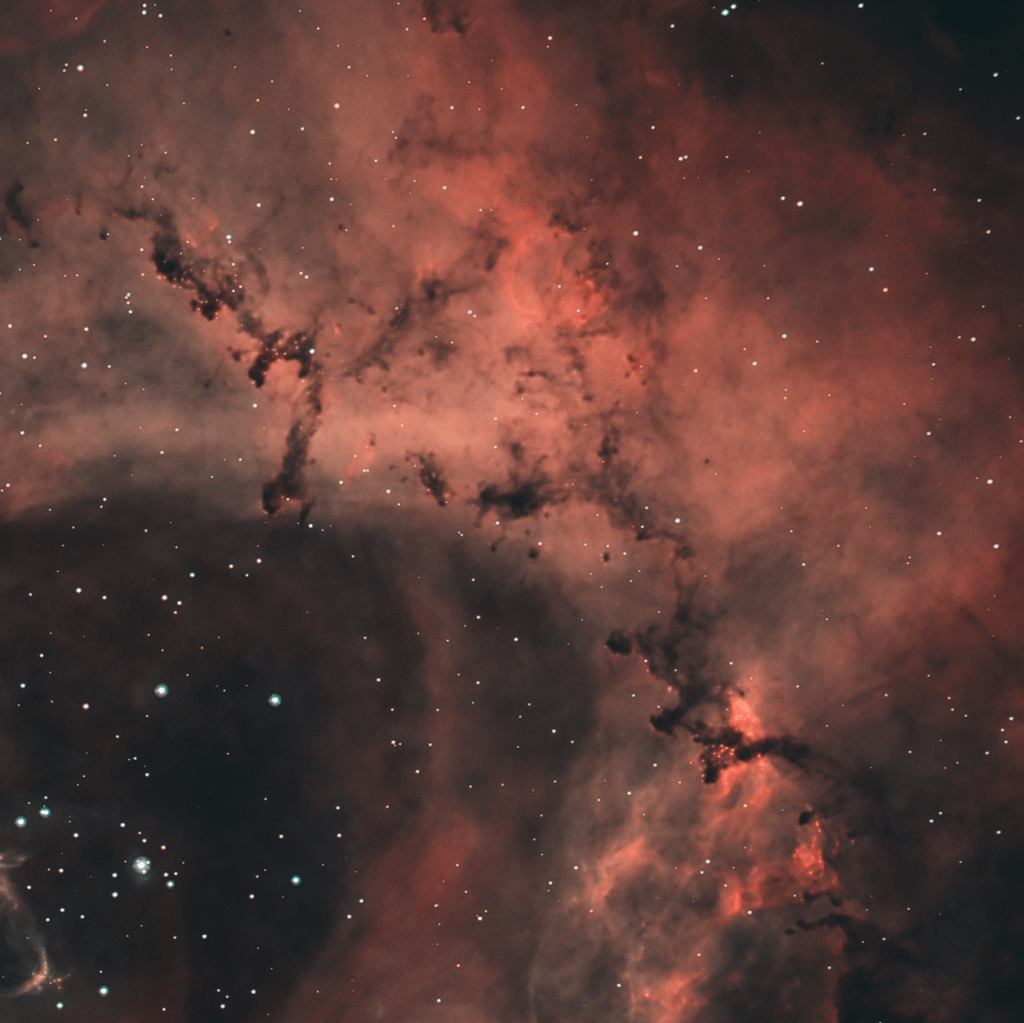
Image taken 1-16-25
AstroTech AT80ED scope
ZWO ASI533MC Pro camera
ZWO Duo-band filter
60×180 sec subs, 3 hours of total exposure time.
 Astro-Shed
Leave a comment