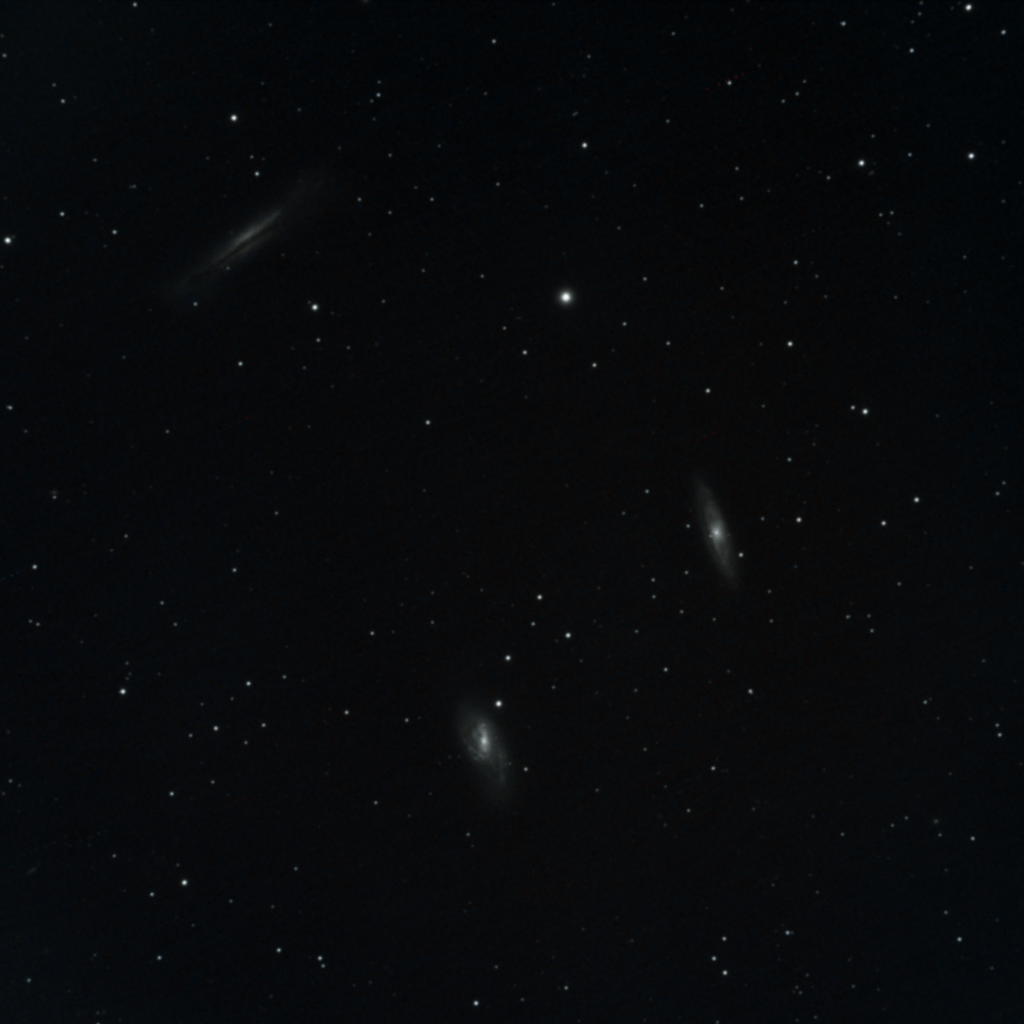
The Leo Triplet, as the name implies, is a magnificent group of three galaxies. They are located in the Leo constellation, which lies in the northern celestial hemisphere. The trio consists of the galaxies NGC 3628, M65, and the well-known M66. Each of these galaxies exhibits unique characteristics and intriguing features. This group belongs to the much larger Virgo Super Cluster of galaxies. This is a vast structure that includes our own Milky Way Galaxy.
The Leo Triplet makes a fine image when viewed through a wide-field telescope. It captures the essence of these three celestial giants in a single frame. I particularly enjoy the stunning close-up images of each galaxy as they reveal their secrets. These detailed views allow astronomers and enthusiasts alike to uncover the complexities of their formations. They also reveal the presence of dark matter. Additionally, they show the processes of star formation taking place within their spiral arms. Let’s take a deeper look.
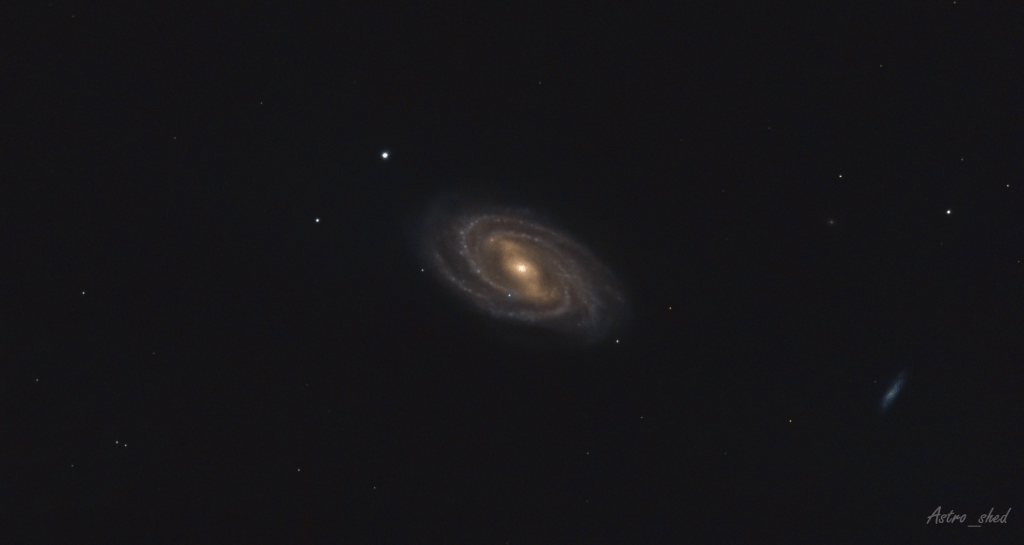
M 65

The furthest west of the trio is M65, discovered by Charles Messier in 1780. It is classified as an SAB(a) type galaxy. This means it is a barred spiral galaxy. It is characterized by its elegantly formed structure. Its tightly wound spiral arms gracefully extend outward from the central bar. The disc area is relatively smooth and lacks clumps. Clumps would typically indicate clusters of stars or other cosmic material. This smoothness contributes to its overall visually pleasing appearance.
The prominent dark dust lane on the edge of M65’s inner disc area is a notable feature. It adds an intriguing contrast to the bright regions of star formation surrounding it. Observations of this galaxy reveal a wealth of information about its formation. They also provide insights into its evolutionary processes. These observations make it a point of interest for both amateur astronomers and professional astrophysicists alike.
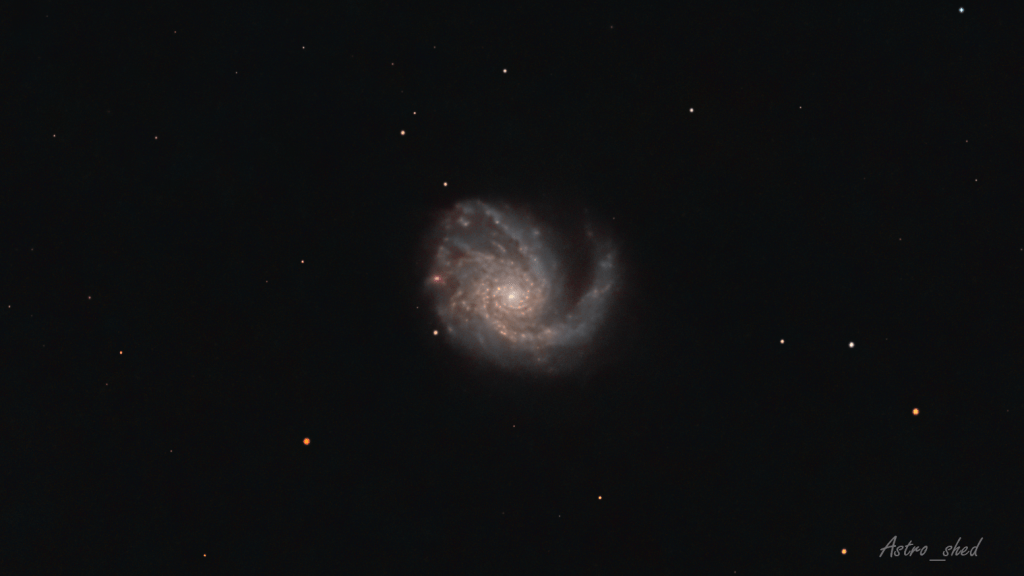
M 66

The southern galaxy of the trio is M66, again discovered by Charles Messier in 1780. This fascinating galaxy appears on an intermediate angle to us. It is cataloged as a barred spiral with intermediate arms, or SAB(b). M66 exhibits a much more dynamic structure in its spiral compared to the previous galaxy. It showcases multiple clusters that add to its vivid appearance. There is also a noticeable increase in blue hues throughout its arms. This blueish color indicates the presence of young, hot stars. It signifies that star formation is actively ongoing within this galaxy.
The process of star formation is crucial to galactic evolution. In M66, we witness this phenomenon at work. Blue stars dominate the visual spectrum here. They are known for their short lifespans. Typically, they last only a few million years. They burn through their hydrogen fuel at an astonishing rate. This rate is significantly faster than their white, yellow, and red counterparts. These other star types can persist for billions of years. This rapid consumption of resources leads to a continual cycle of birth and death among stars. It contributes to the galaxy’s vibrant and ever-changing landscape. M66 is a truly captivating subject for astronomical studies. It serves as a prime example of the intricate processes shaping our universe.
NGC 3628

NGC 3628 is perhaps the most striking member of the trio of galaxies in this fascinating cosmic region. It was discovered by Charles Messier in 1784, four years after the previous galaxies while being less than an arc degree away,
When observed from our vantage point, it is seen edge-on and is classified as a peculiar spiral, designated as S(b)p. This galaxy’s peculiarity is not visible in the accompanying image. It lies in a faint tidal tail of stars that extends off the disc to the lower left. This dramatic trail of stars formed recently, in astronomical time scales. A gravitational encounter with one or both of the other members of the trio caused it. It showcases the dynamic interactions that frequently occur in the universe.
The wonderful dust lane is prominently visible. It bisects the galaxy and gives rise to its affectionate nickname, “The Hamburger Galaxy.” This striking feature adds a layer of intrigue to its overall appearance, enhancing its visual complexity.
The other noticeable trait in the image is the thickening of the disc. It becomes apparent as one moves from the central region outward towards the edges of the galaxy. This observable characteristic is quite unusual for most spiral galaxies. It can be attributed to the ongoing gravitational interaction. This interaction influences the distribution of stellar material. It creates this unique disc morphology.
Image capture details
The galaxy close ups were Imaged with Celestron 8″SCTx0.63x scope with ZWO ASI533MC Pro camera. 20x180sec frames each..
The image of the trio was taken with AstroTeck80ED scope and ASI533MC Pro camera. 134x15sec frames, live stacked, no post processing.
 Astro-Shed
Leave a comment