With Spring comes the opportunity to observe and image galaxies. Galaxies are one of my favorite objects of the night sky due to their diversity and details. This week we’re going to look at spiral galaxies and in particular some unique features of spiral galaxies. I’ve provided examples of Spirals, Barred Spirals and Intermediate Spirals below.
Spirals
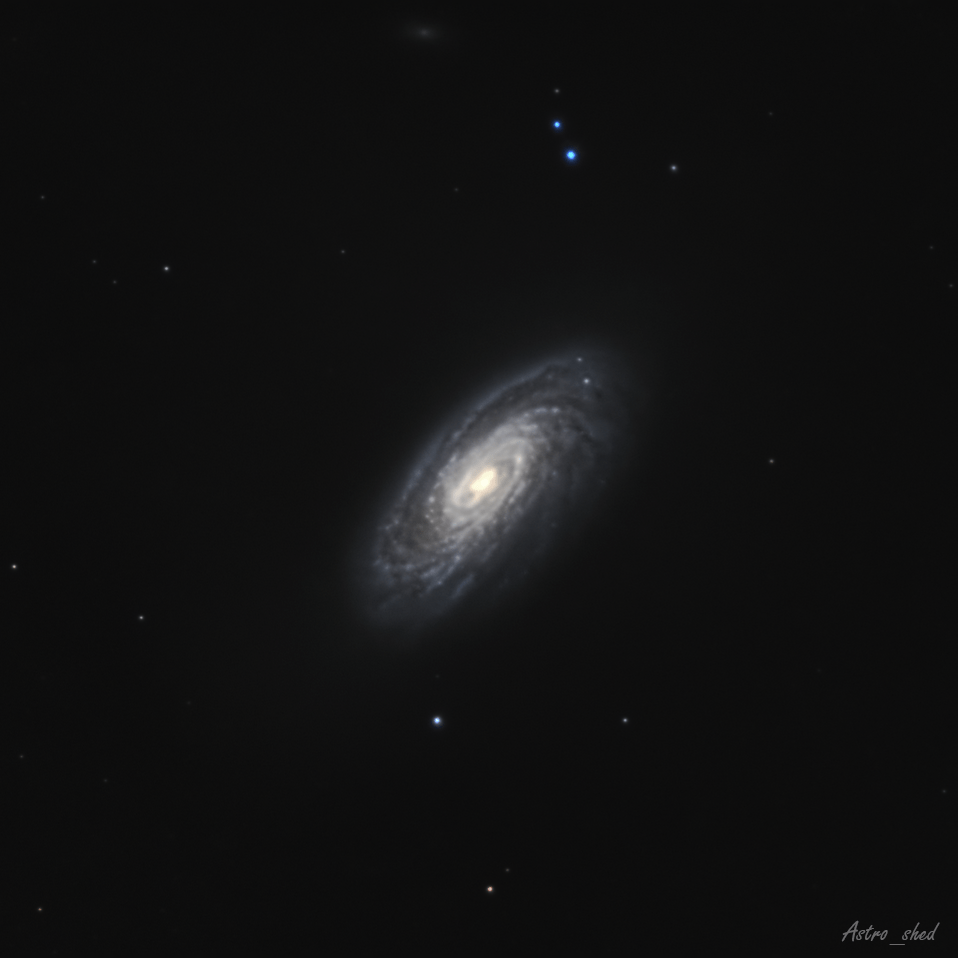
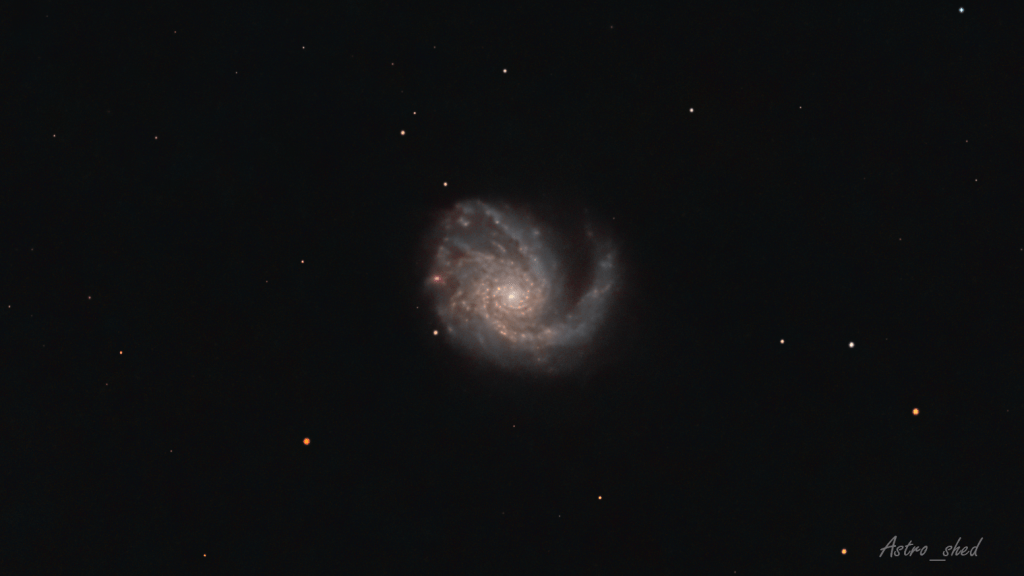
Messier 88 and 99 are both examples of Spiral Galaxies. The spirals are not exactly a fixed structure but a wave of elevated density of stars. It is analogous to a traffic jam on a freeway where cars slow down and create an area of congestion which continues to move forward, eventually clearing and returning to a more spread out condition.
The first thing to notice is that each one is tilted at significantly different angles towards us, the observer. This results in different features being visible. Both Messier 88 and 99 have arms that are attached directly to the core region of the galaxy. The arms contain many condensations of newly formed stars which appear bluer than the older stars in the central region which are more yellow-red.
Messier 88’s tilt allows us a glimpse at its dark dust lanes on the inner edges of its spiral arms. Messier 88 is an example of a “flocculent galaxy,” where its arms are tightly wound around its core creating smoother transition into the core area. The more compressed state of the inner area of these types of galaxies often lead to accelerated star formation and are called “Starburst” galaxies.
Messier 99’s more face-on tilt shows off its beautiful arms and in particular the one heavy arm to the right which is more extended than the others. This is an indication that Messier 99 has undergone a gravitational event with another galaxy at some point in its history. The red color in the arms are HII regions where new stars are being formed. While not considered a Starburst galaxy, the stellar formation activity within this galaxy is several times higher than that of similar galaxies.
Barred Spirals
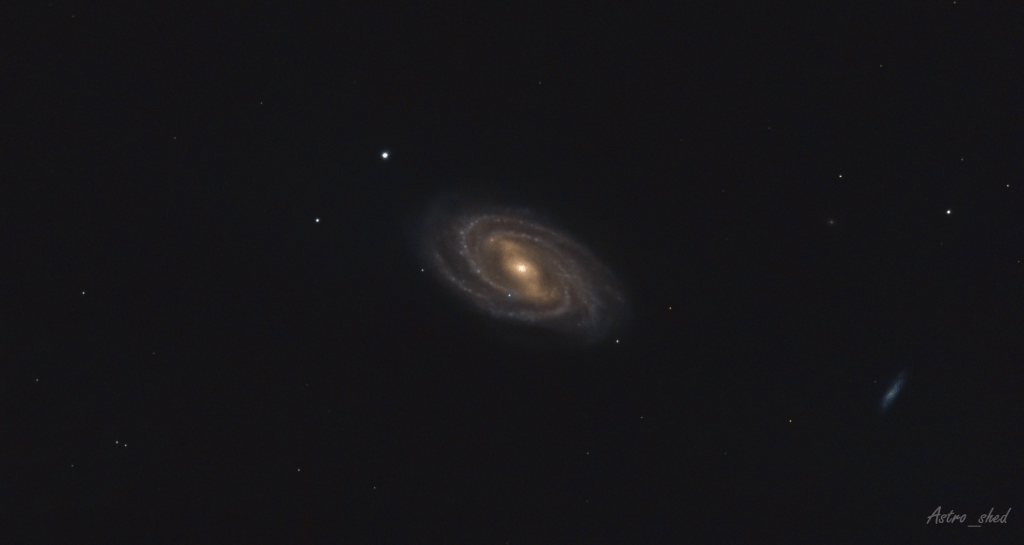
Barred spiral galaxies are characterized by a strong linear or bar that bisects the core. Weaker spiral arms are attached at the ends of the bar. These types of galaxies frequently show greater star formation in the bar and inner area of the galaxy.
The bar funnels gas and dust from the outer regions into the core area. The result is an increase in angular momentum of the galaxy. This is analogous to when an ice skater spins and brings their arms into their body resulting in spinning faster.
Bars are thought to increase the size of the central bulges of galaxies. They are also thought to form, dissolve and reform as the galaxy evolves. Approximately 2/3 rd’s of observed galaxies are barred spirals.
Intermediates
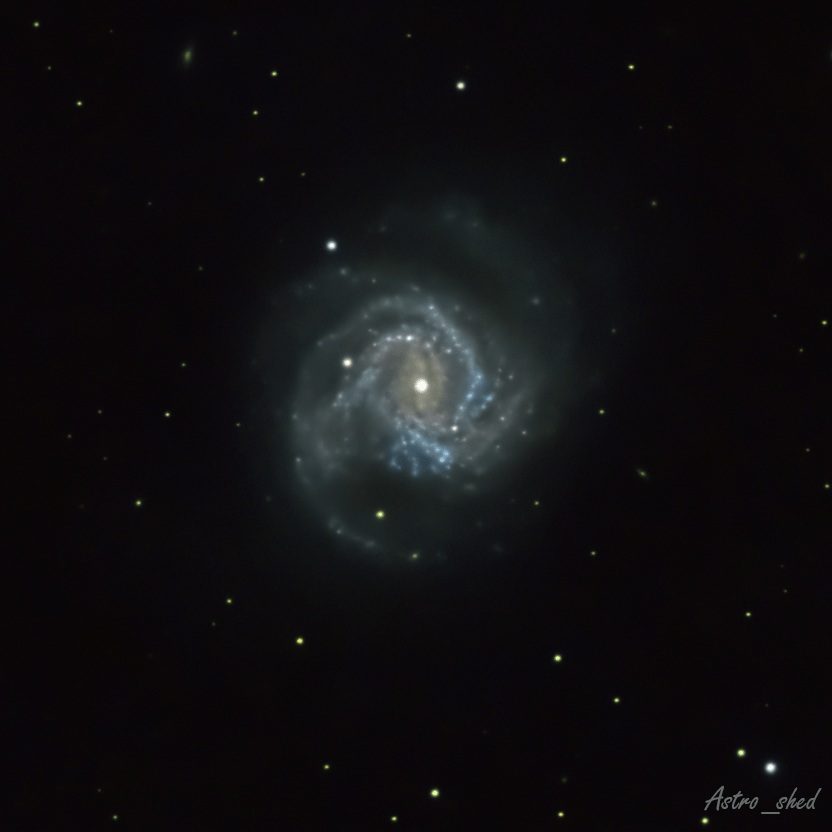
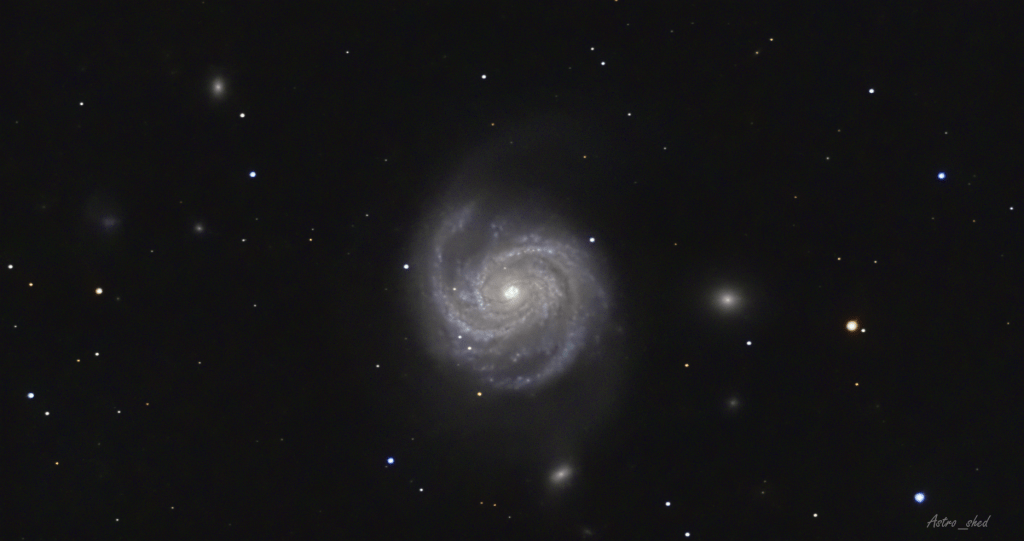
Intermediate galaxies have characteristics of both spirals, and barred spirals. Their arms are more defined and organized than that of a flocculent galaxy. The central bar is less well defined than a true barred spiral.
In Conclusion
Galaxies are not static objects, They are evolving based on internal dynamics and external interactions. Bars, arms and asymmetries are all snapshots of ongoing transformation.
All images here were captured by a Celestron 8″ SCT and QHYCCDminiCam8 camera. Each image is an integration of about 7 hours of LRGB data. More information on each image can be found at my Astrobin account. https://app.astrobin.com/u/Rgwood
clear skies
 Astro-Shed
Leave a comment