Nebulae is a general term for a broad variety of gas and dust clouds in deep space, often considered the birthplaces of stars and planets, as they provide the necessary materials for formation. These magnificent structures can be classified into several categories, including emission nebulae, which glow with vibrant colors due to the ionization of their gas, and reflection nebulae, which shine by reflecting the light of nearby stars. Moreover, planetary nebulae, which represent the remnants of dying stars, showcase intricate patterns and a mesmerizing array of colors, while supernova remnants are the aftermath of massive explosions, scattering elements throughout the cosmos, thus enriching the interstellar medium with the building blocks for future celestial bodies.
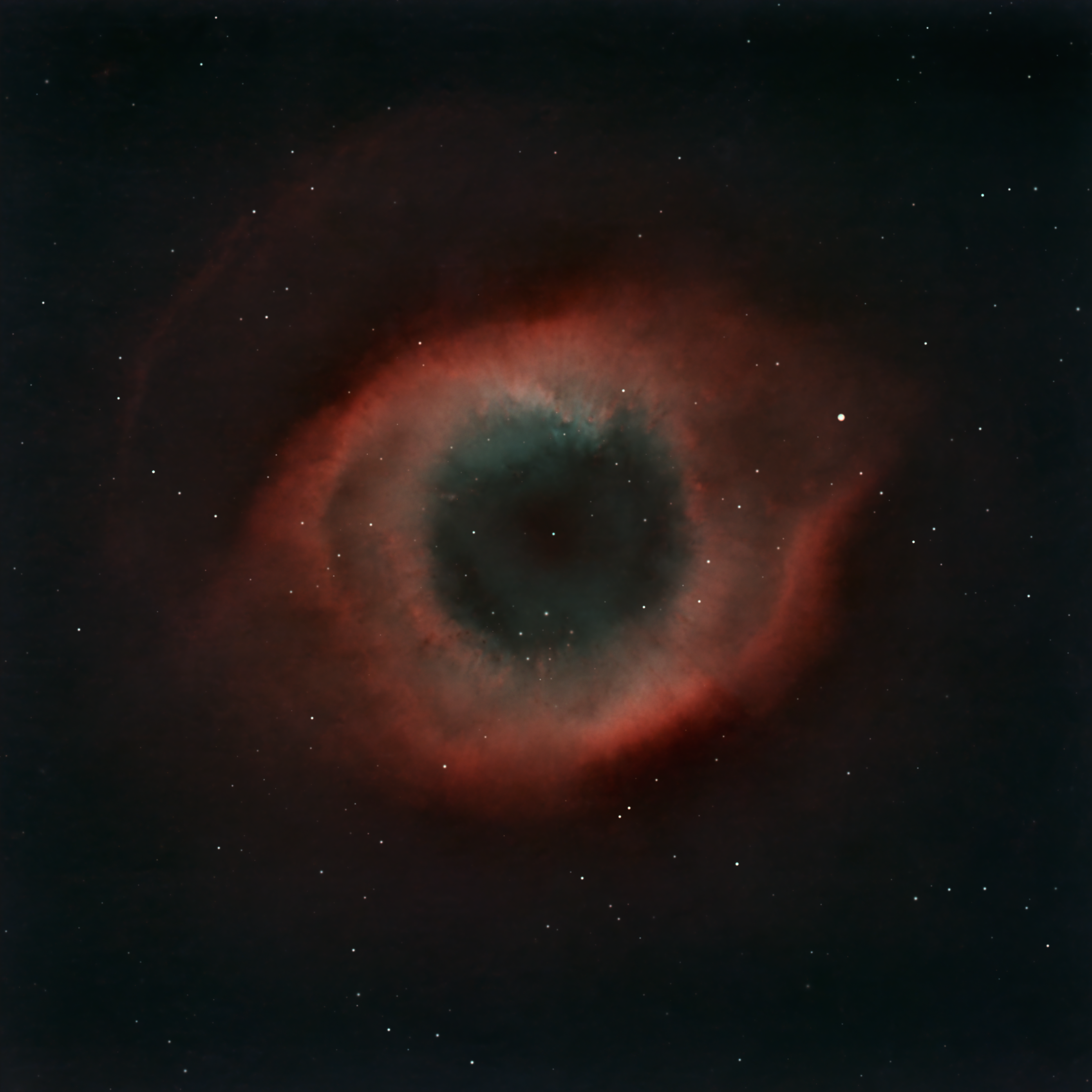
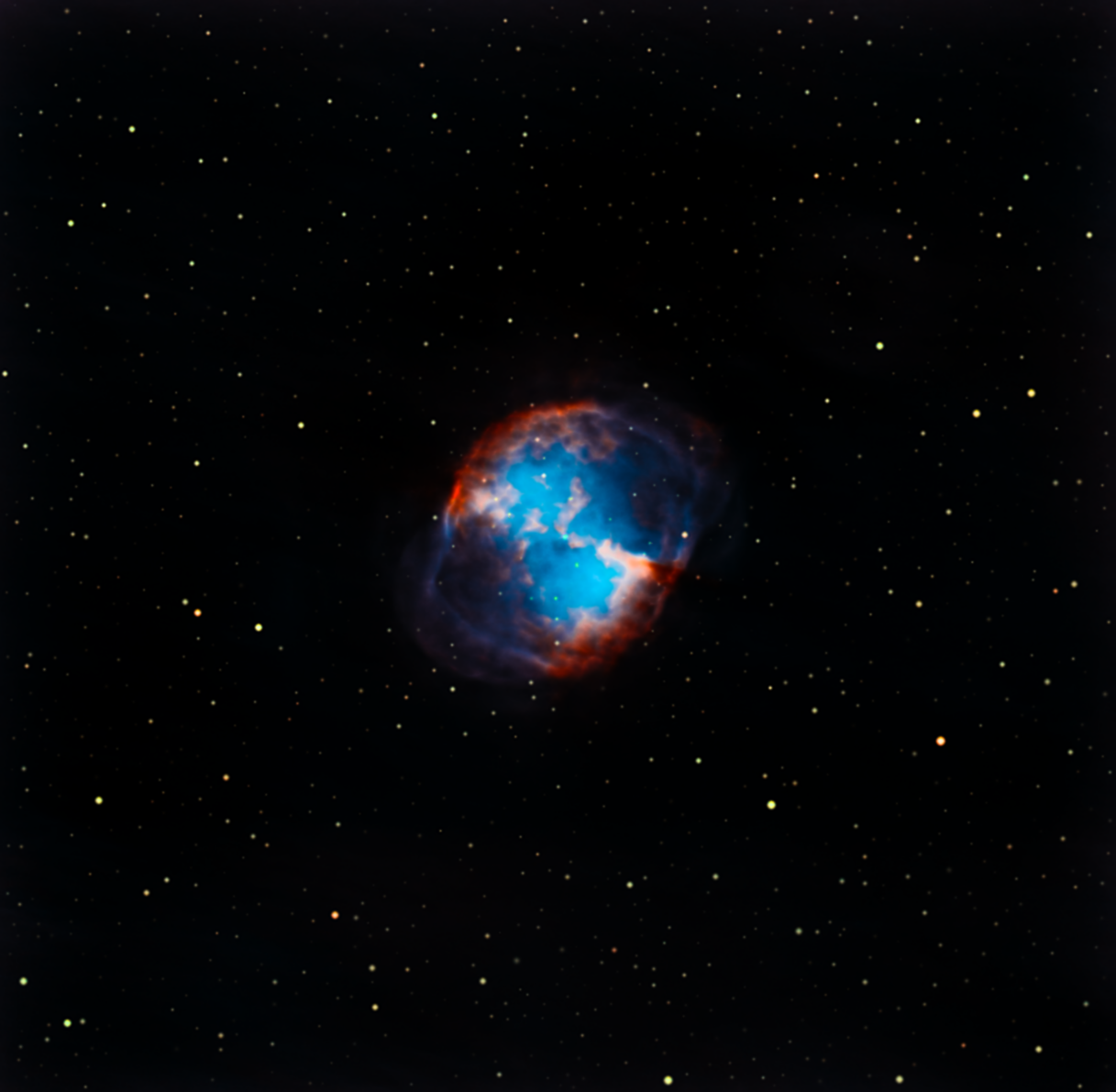
Top Left and middle left – The Helix Nebula and Dumbbell nebulas are a planetary nebula formed from stars, not unlike our Sun, throwing off their outer layers as they shrink to their white dwarf stage of life. Planetary nebulas can take many different forms depending on the symmetry or asymmetry of how the outer shell is expelled.
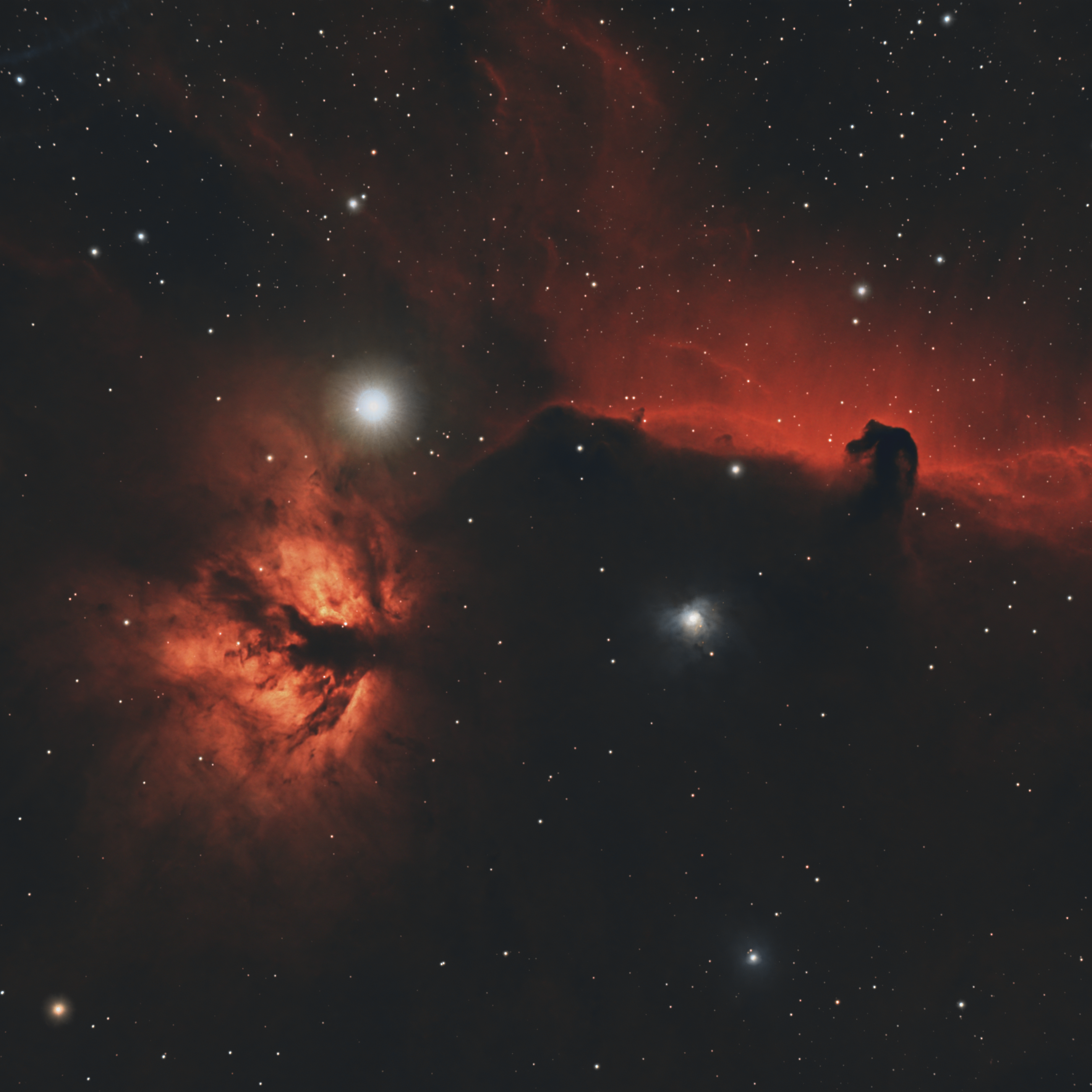
Lower left is the Horsehead and Flame nebula in Orion. This is a combination of both emission and dark nebulae. The Horsehead is a cloud of cold dense dust that is in front of the red emission nebula. You can see that by the different density of stars above and below the red emission nebula that this dark nebula extends further towards the bottom of the frame. The Flame nebula also has an intervening dark nebula running through its center.
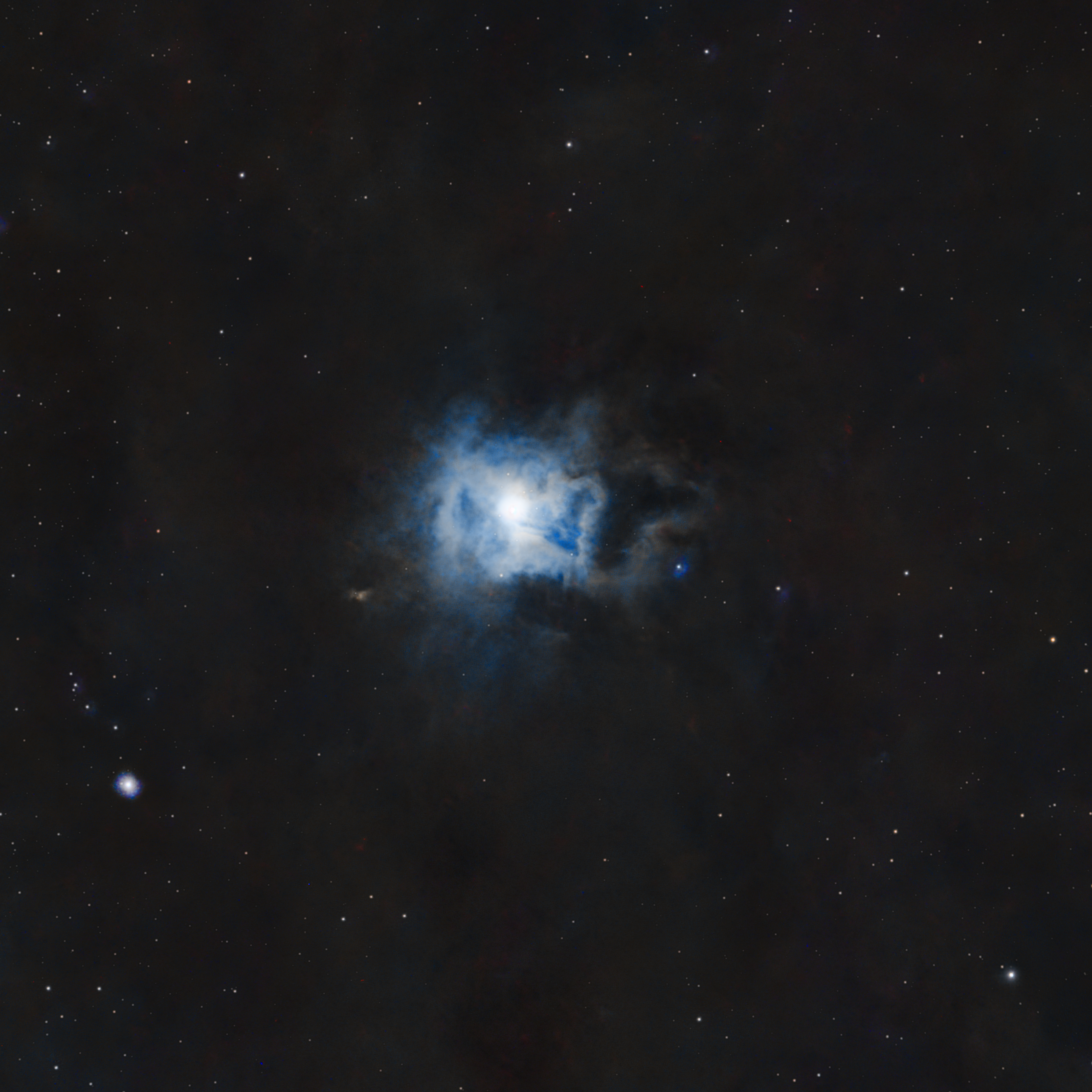
Lower right is the Iris reflection nebula. The blue reflected light is coming from a hot blue giant star in the center of the nebula.
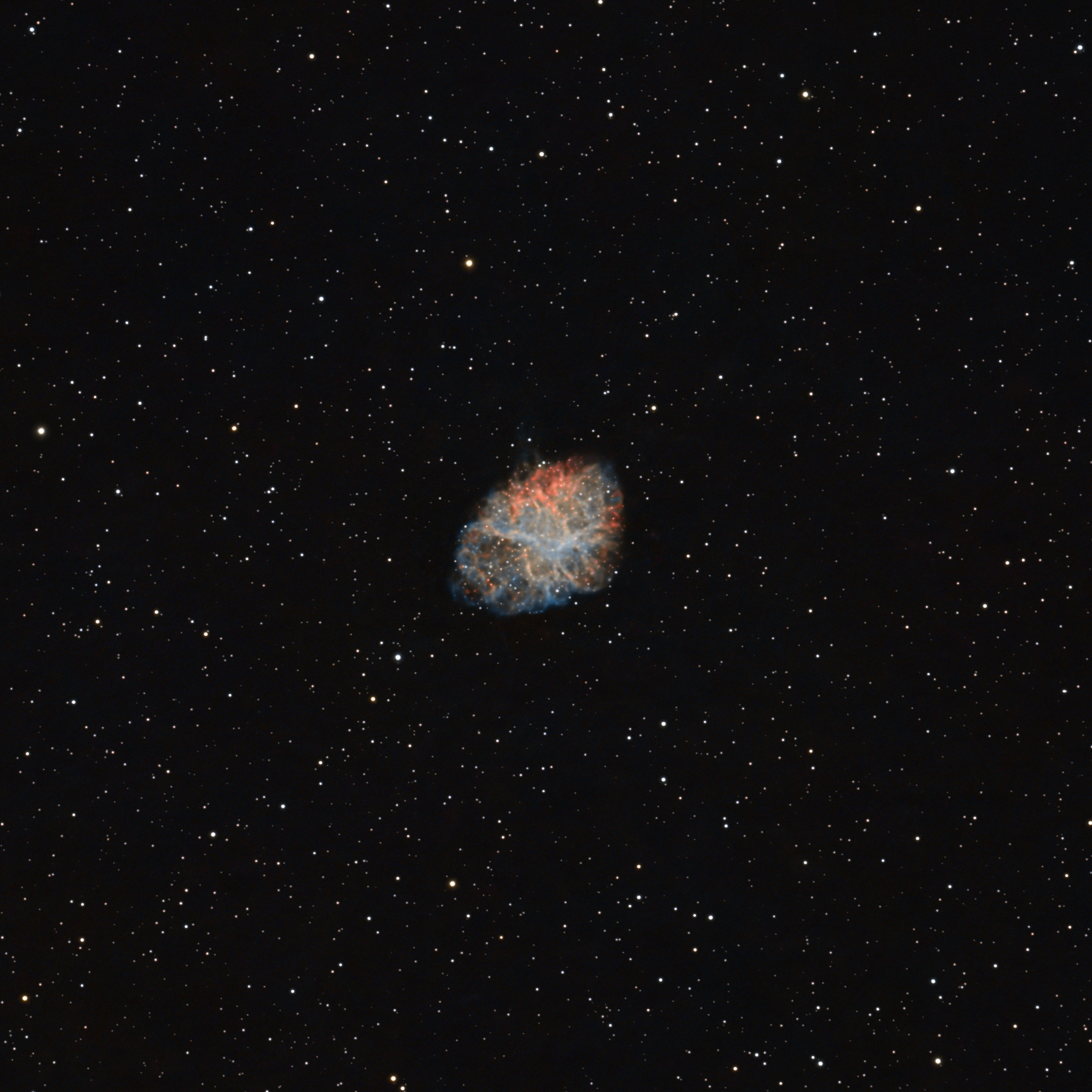
Middle right is the Crab Nebula in Taurus. It is a Supernova remanent which was created when a massive star exploded, forming a highly energetic, but tiny neutron star. The filaments are formed as the expanding gasses are slamming into interstellar matter (bow shocks) which causes the gas to compress. As a gas compresses, it also heats up and, in this case, it heats enough to cause it to ionize, giving off the light we see here.
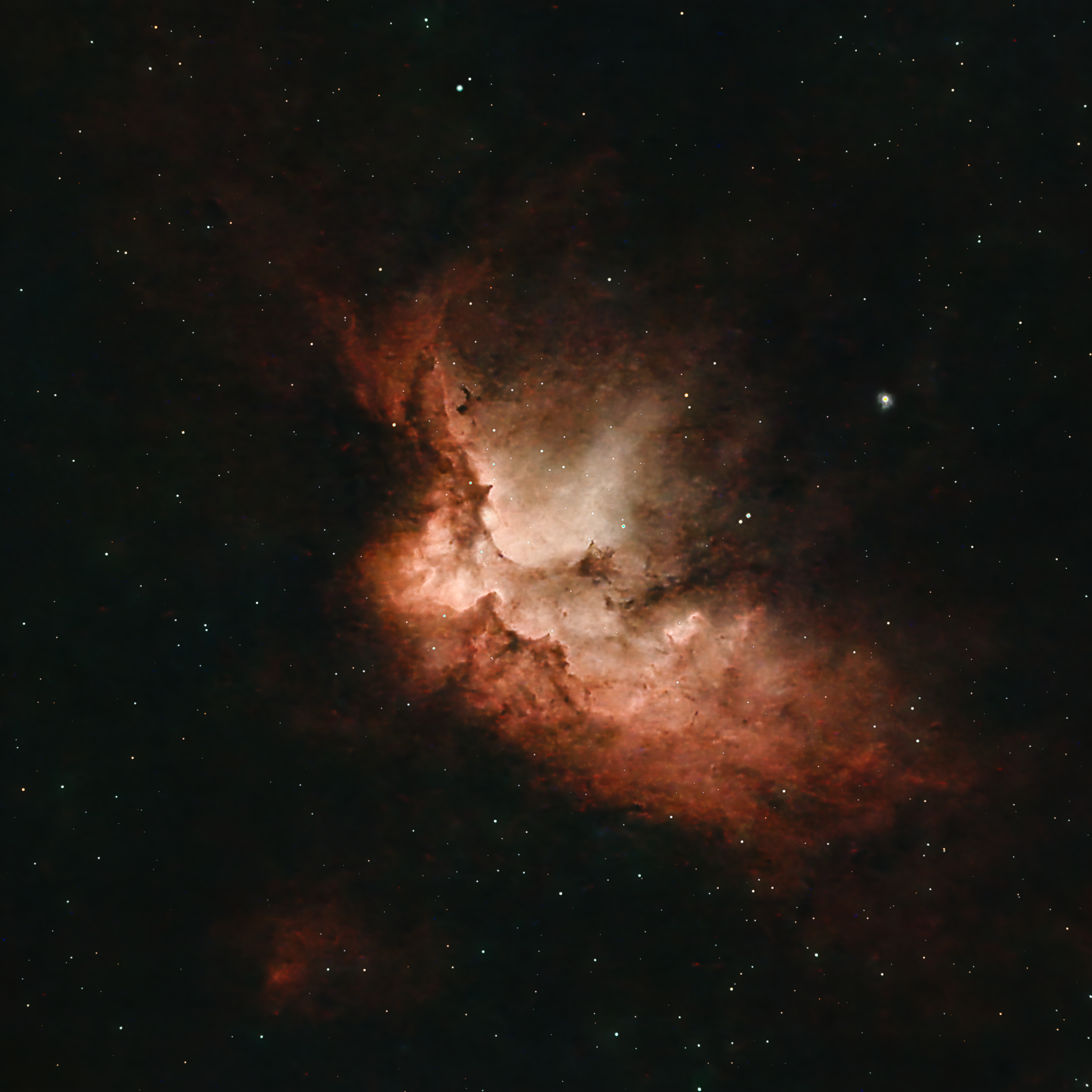
Top right – The Wizard Nebula. This is another example of an emission nebula. Somewhere in the center of the nebula is a star, or many stars that are exciting the surrounding gasses. In this case, its Hydrogen and Oxygen.
 Astro-Shed