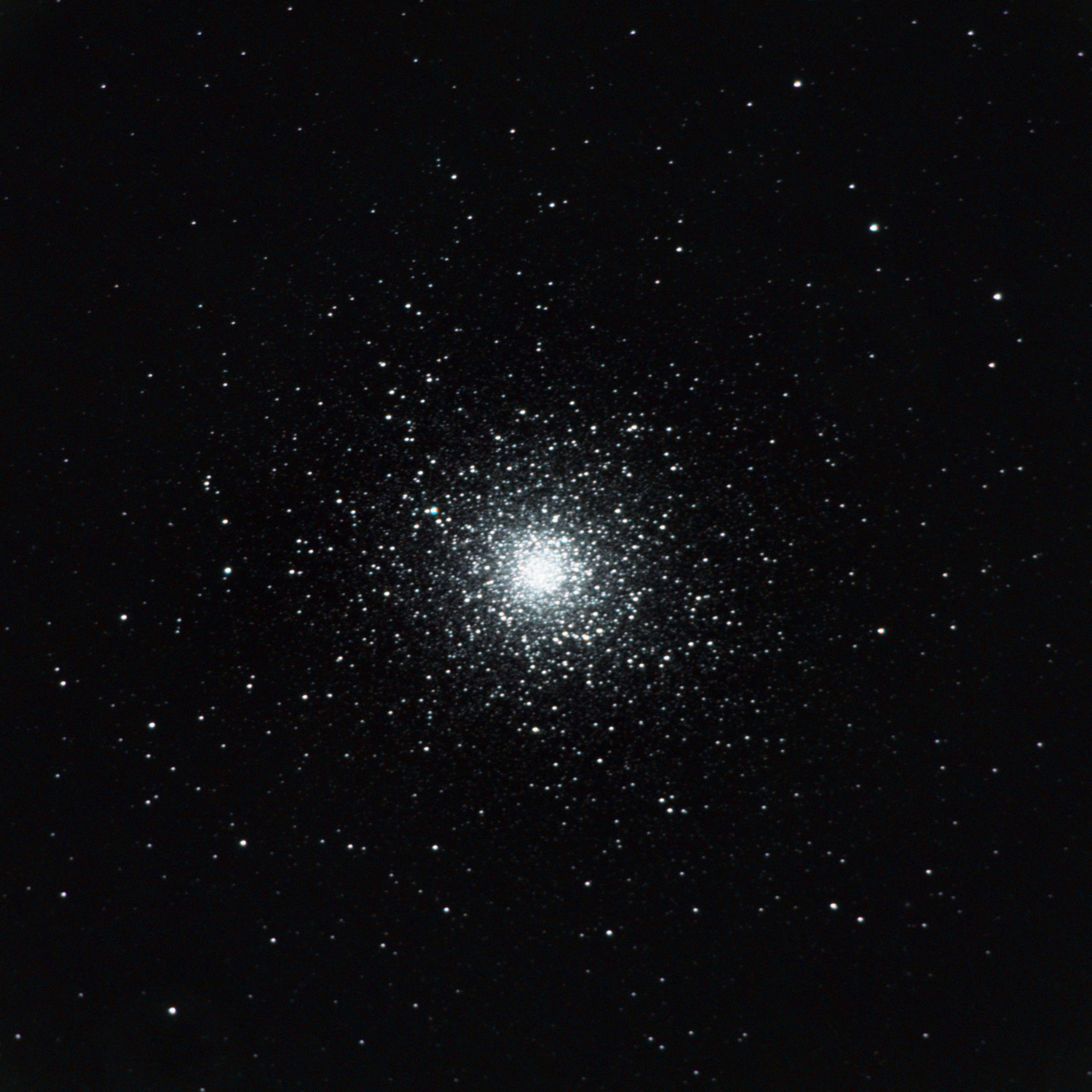
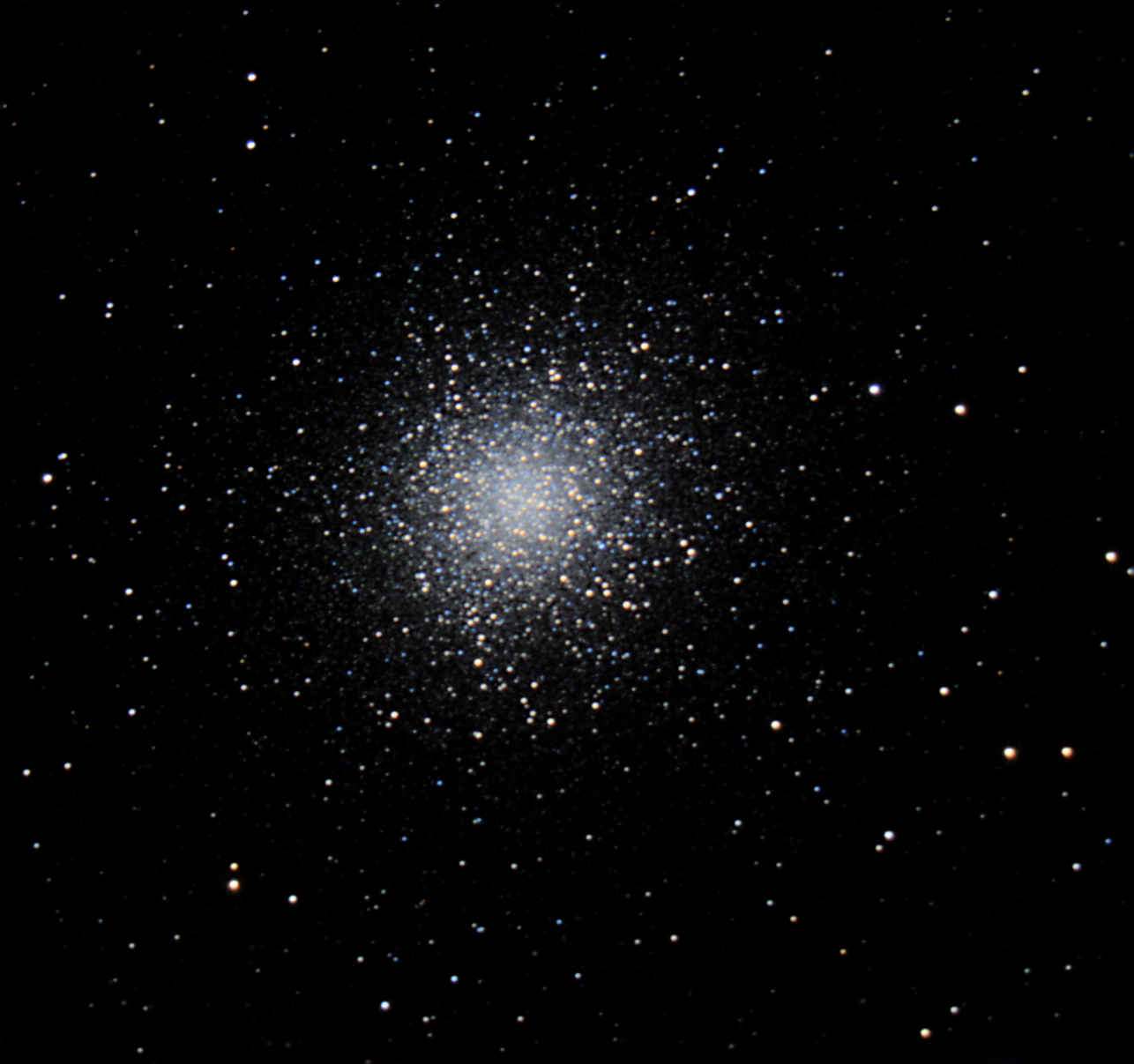
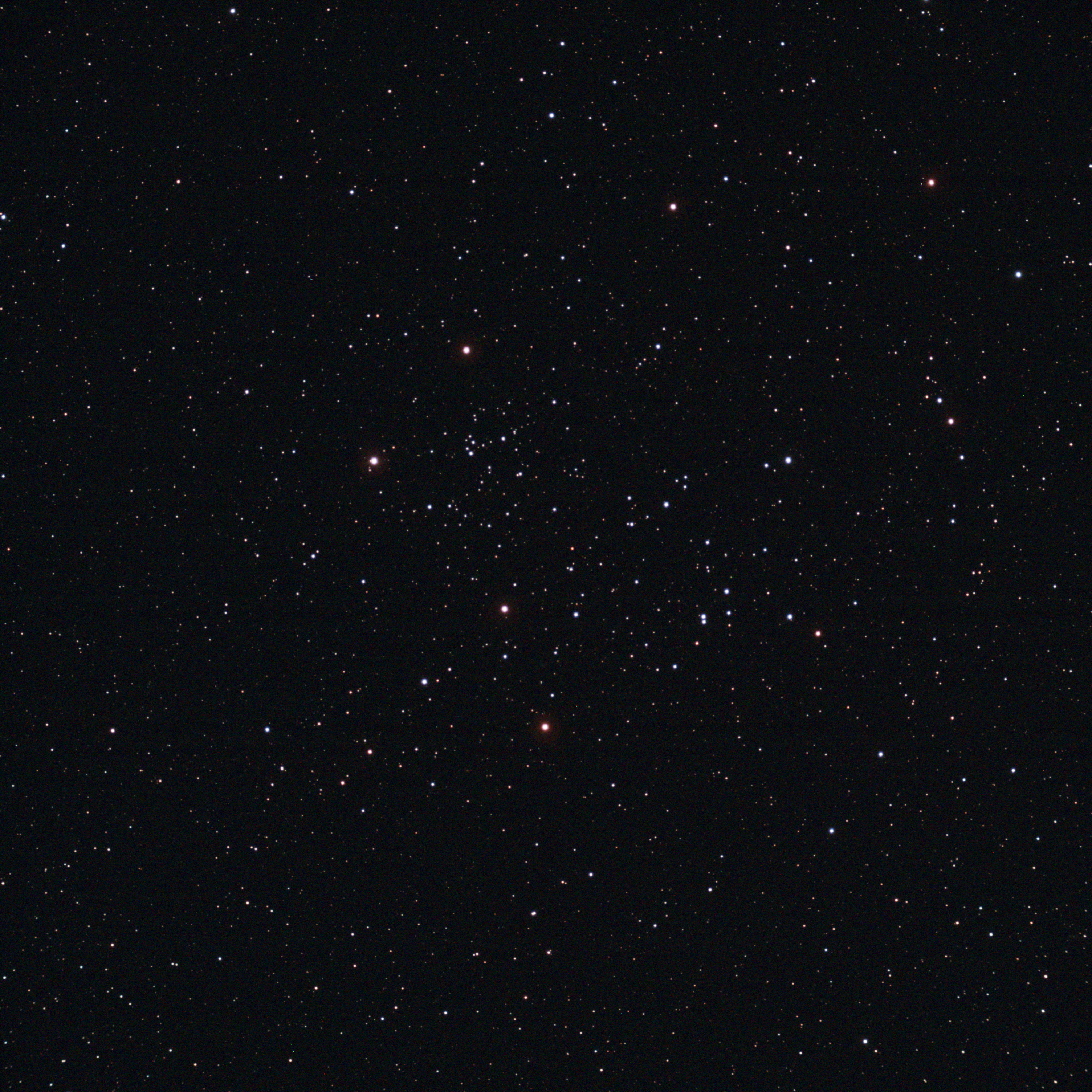
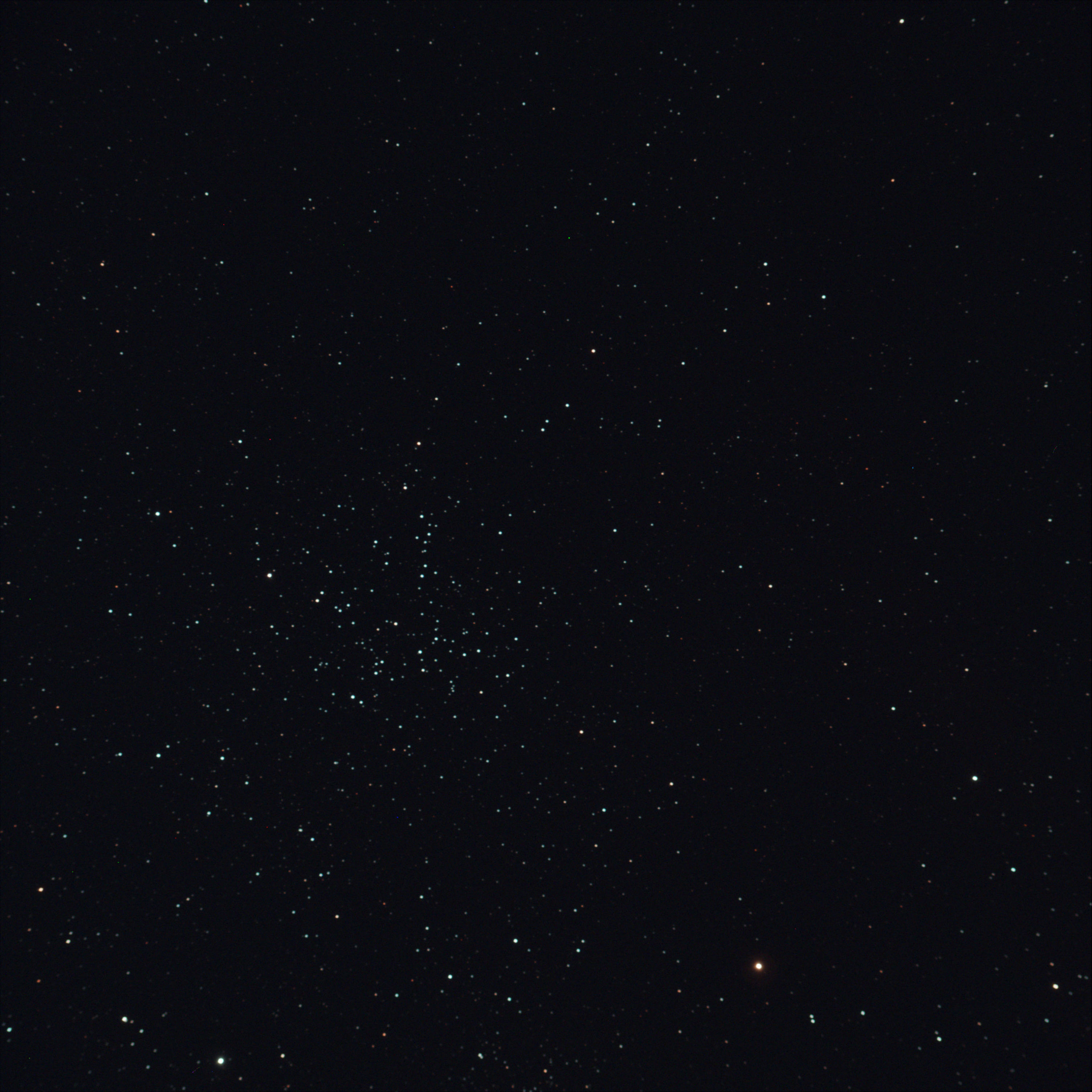
Star cluster are divided into two major categories, Globular and Open clusters. Globular cluster, like the two top images are what their name implies. They are dense concentrations of stars all bound gravitationally together. There can be many 10’s of thousands of individual stars. These stars are generally a very old population and there is not much star formation activity within the cluster. The origin of globular clusters is not fully understood; however, one theory says that they are cores of ancient galaxies whose stars have been absorbed into our own galaxy. These clusters are mostly all located around the outer halo region of our own galaxy. Globular clusters have been observed around other nearby galaxies as well.
Open clusters are distributed throughout our galaxy’s spiral arms. Similar to globular clusters, they are gravitationally bound systems of stars; however, their structure and number reveal significant differences that differentiate the two types of clusters. Open clusters serve as the birthplaces of stars, forming in areas where a concentration of hydrogen gas, often seen in the magnificent and colorful nebulae, has condensed under the influence of gravity to create new stars. This process leads to the birth of young, bright stars, often accompanied by the development of new planetary systems. The resulting clusters can include dozens to hundreds of stars, all sharing a common origin and often exhibiting various spectral types and luminosities. Observing open clusters often reveals stars of different colors and brightness. The concentration can vary from extreme to almost insignificant.
 Astro-Shed